




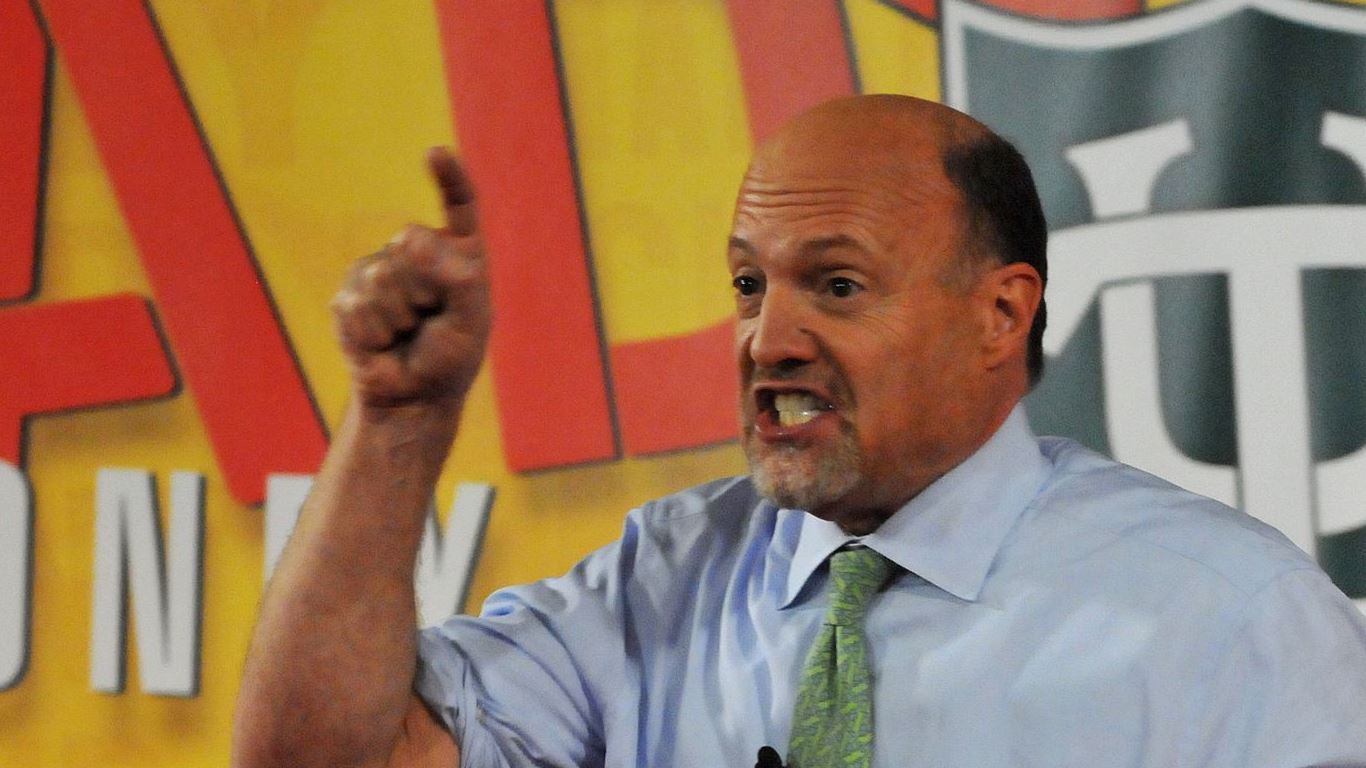
Jim Cramer provided a vital reality check for a first-time homebuyer, advising against relying on hope and instead advocating for expecting market corrections. He outlined a 50/50 portfolio rebuild strategy, splitting contributions between an index fund and five individual stocks. Cramer also emphasized choosing an index based on investment horizon and cautiously adding an optional crypto or gold hedge to navigate market volatility effectively.
In a candid exchange on a recent episode of Mad Money, Jim Cramer offered a stern reality check to a young first-time homebuyer grappling with a significantly reduced investment portfolio after a down payment. His unwavering advice: “Expect corrections and don’t rely on hope as an investing strategy.” This straightforward message underscores the critical need for a disciplined plan when rebuilding wealth, especially when a substantial life event like homeownership resets financial starting lines.
The young caller, having committed a large portion of his assets to his first home, sought guidance on how to replenish his investment balance. Cramer's response was a testament to his practical, no-nonsense approach to market dynamics, highlighting that impulsive, hope-driven decisions can derail a portfolio for years.
Cramer's Robust 50/50 Rebuild Strategy
Cramer’s recommended portfolio framework is both simple and effective. It involves splitting monthly contributions equally: 50% directed towards a carefully chosen index fund and the remaining 50% allocated to five individual stocks that resonate with the investor. For those seeking an additional layer of diversification, a modest allocation to crypto, with Bitcoin being his preferred asset over traditional gold, can serve as optional insurance. The bedrock of this advice is realism – a stark departure from the often-lazy assumption that asset prices only move upwards.
To illustrate, imagine a consistent monthly contribution of $600. Following Cramer’s model, $300 would flow into an index ETF. The other $300 would then be used to purchase shares in five distinct companies, approximately $60 per name. If one were to choose from the largest Nasdaq holdings today, this could mean acquiring fractional shares of market titans like NVIDIA (NASDAQ:NVDA), Microsoft (NASDAQ:MSFT), Apple (NASDAQ:AAPL), Amazon (NASDAQ:AMZN), and Alphabet (NASDAQ:GOOGL). The emphasis here is on consistent investment rather than attempting to perfectly time market entries.
Cramer articulated the potential upside of this individual stock approach: “One of them could hit big, another one could hit big, and next you know, you are a millionaire because of the individual stock side.” Recent market performance often demonstrates this asymmetry; while some giants like Alphabet have soared (up 128% over the past year), others like Microsoft have seen pullbacks (down 7% in the same period). Owning a diversified set of five individual stocks significantly increases the probability of catching a major winner compared to betting on just one.
Navigating Index Choices: Nasdaq vs. S&P for Different Horizons
The choice of index fund, according to Cramer, hinges entirely on an investor's time horizon, which he directly correlates with age. His explicit recommendation for younger investors was: “You’re young, do the Nasdaq-100 fund, not the S&P.”
Examining the trade-offs reveals why. A Nasdaq-100 tracker has shown remarkable growth, with a 17% gain year-to-date and an astounding 562% over the last decade. In contrast, an S&P 500 tracker, while robust, has delivered 9% year-to-date and 259% over the same ten-year span. The tech-heavy Nasdaq-100 offers higher potential gains but inherently carries more concentrated risk and volatility.
For those with a long investment runway, say 30 years or more, this increased volatility can be a beneficial characteristic. Such investors have the luxury of riding through market drawdowns, confident in the eventual recovery and subsequent capture of greater upside. However, for investors with a shorter time horizon (10 years or less), the broader composition of the S&P 500 tends to soften market blows. The VIX, a key measure of market volatility, has averaged around 18 over the past year and briefly spiked to 31 in March, serving as a stark reminder that market corrections are a recurring reality.
Considering the Optional Gold/Crypto Hedge
Cramer’s advice for an insurance layer is specific: Bitcoin as his preferred hedge, with a gold ETF or physical bullion as a distant second. Interestingly, recent market data presents a counter-narrative, with gold appreciating by 36% over the past year, while Bitcoin experienced a 30% decline in the same timeframe. Incorporating a modest 5% to 10% commodity allocation can help smooth portfolio returns without significantly hindering the compounding power of the equity side of investments.
Your Action Plan for the Week Ahead
- Establish a consistent, fixed monthly contribution that aligns with sound financial planning rules, specifically the 28/36 affordability rule, alongside your new mortgage obligations. Automate this contribution before you even have a chance to spend the cash.
- Divide this monthly contribution equally (50/50) between your chosen index fund and five individual stocks that you genuinely understand and could explain to a friend.
- Select your index fund based on your investment horizon: Opt for a Nasdaq-100 fund if you have 20+ years until you need the funds, or an S&P 500 fund if your timeline is shorter.
- Consider adding the gold/crypto sleeve only after your core equity investments are well-funded. If this optional layer tempts you to constantly tinker with your portfolio, it's best to skip it entirely.
- Critically, define your sell rules now, while your emotions are not influencing your decisions. Cramer’s direct warning is to cut your losses and shift to a stock you believe has genuine growth potential, driven by fundamental reason, not by wishful thinking.
Rebuilding your wealth after a significant down payment is often unglamorous work. It involves consistent monthly deposits, a few well-understood individual stocks, and a robust index fund working diligently in the background. Embrace the inevitability of market drawdowns, plan strategically for them, and resist the urge to simply wait for rising prices to solve your investment challenges.