

The Pentagon has dramatically expanded its list of Chinese companies with alleged military ties, now including tech giants Alibaba, Baidu, and carmaker BYD. This move restricts U.S. Defense Department contracts and indirectly impacts third-party suppliers, posing a significant challenge to U.S.-China diplomatic relations.
The updated “1260H list” underscores Washington’s deepening security concerns over Chinese technology and its potential strategic threats. Several listed companies have already disputed their inclusion and plan to seek removal.
In a significant move that threatens the delicate U.S.-China diplomatic thaw, the Pentagon has broadened its list of Chinese companies deemed to have aided the nation's military, now including tech giants Alibaba Group, Baidu Inc, and electric vehicle maker BYD. This update to the "1260H list" was published Monday evening stateside, identifying entities affiliated with China's military or defense industrial base.
While these designations do not impose direct sanctions, they carry substantial implications. Starting later this month, the U.S. Defense Department will be prohibited from direct contracts with these listed companies. Furthermore, procurement of their products or services through third parties will be banned beginning in June 2027. Michael Hirson, head of China Research at 22V Research, commented that these indirect restrictions could compel some U.S. firms collaborating with the military to drop designated Chinese companies as suppliers.
The announcement immediately impacted markets, with Baidu's American depositary receipts dropping 2.1%, Alibaba sliding 0.8%, and BYD seeing a 0.8% decrease. This crackdown follows recent efforts to stabilize U.S.-China relations, including a meeting between President Donald Trump and Chinese leader Xi Jinping last month where a trade truce was agreed upon.
China's Foreign Ministry quickly responded, with a spokesperson criticizing the U.S. for creating discriminatory lists under the guise of national security and vowing to protect Chinese companies' legitimate rights. The current expanded list largely mirrors a previous version briefly posted in February before being withdrawn, notably reinstating Chinese memory chipmakers CXMT and YMTC, whose earlier omission had drawn criticism from Washington's China hawks.
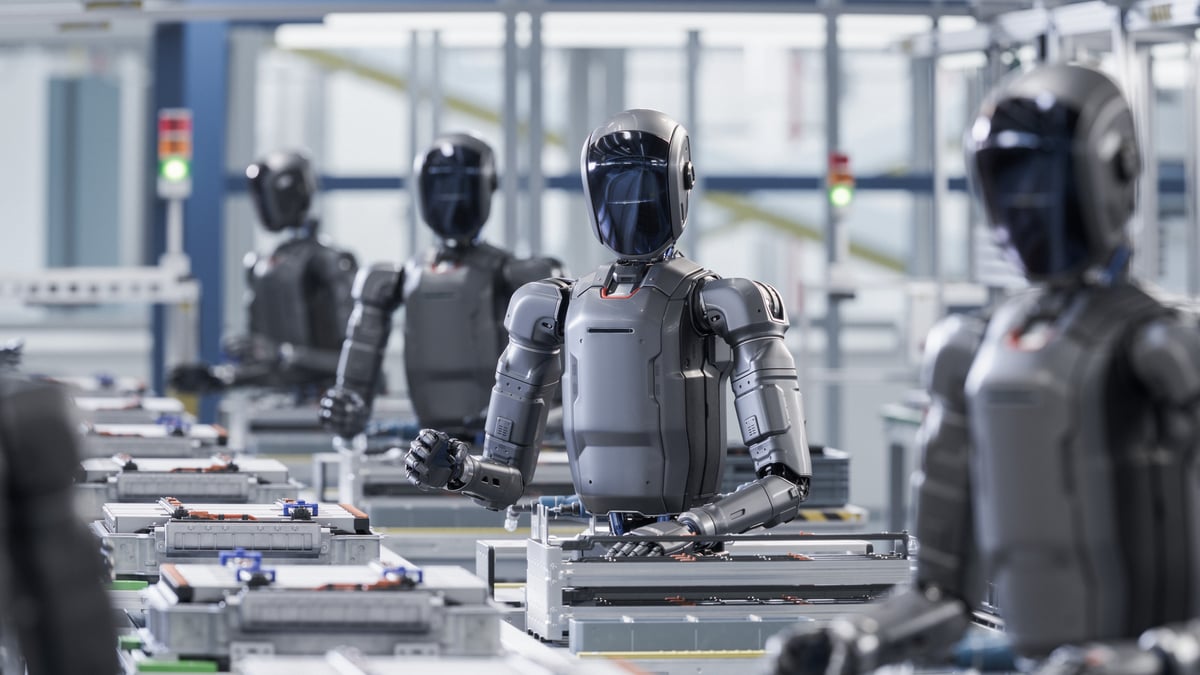
The Pentagon's designations categorize these companies as "military-civil fusion" contributors to China's defense industrial base, linking them to the State-owned Assets Supervision and Administration Commission and the Ministry of Industry and Information Technology. Other notable additions include biotech giant WuXi AppTec, lidar producer RoboSense Technology, and Unitree, a prominent manufacturer of humanoid robots, which recently partnered with U.S. chipmaker Nvidia for robot development.

A general view of the office building of Baidu is in Pudong, Shanghai, on Feb. 9, 2026. Ying Tang | Nurphoto | Getty Images
The broad scope of these additions reflects Washington's deep-seated belief that civilian technology firms in China are intrinsically tied to state military objectives, a concern that has already led to restrictions on China's semiconductors, AI hardware, and advanced manufacturing. Hirson noted that while these measures are largely symbolic, falling short of an investment or export blacklist, they demonstrate how extensively Washington is drawing lines around sensitive Chinese technology, from consumer electronics to biotech and robotics.
Despite the current escalations, Hirson does not foresee the U.S. Treasury or Commerce imposing more formal restrictions on prominent Chinese tech firms this year, as Washington aims to maintain stable bilateral ties. Both WuXi AppTec, Alibaba, and Baidu have disputed their designations and announced intentions to seek their removal, with NIO, another firm added, stating the restrictions would not impact its business and pledging to engage with the U.S. defense department. Historically, some Chinese companies, like Xiaomi, have successfully challenged their inclusion in court.
Han Shen Lin, China country director at Asia Group, highlighted on CNBC's "The China Connection" that this expanded list underscores how national security concerns are increasingly shaping economic policy in Washington. "Even as Washington and Beijing seek stability, there are still bipartisan concerns in the U.S. about China's technological and military use, and that's giving rise to tougher policies across multiple sectors," Lin stated, urging business executives to consider geopolitical factors in their investment and corporate strategies.