


Elon Musk’s assertion that AI development is hampered by power and cooling limitations, rather than chip availability, has boosted energy stocks like Constellation Energy (CEG). However, CEG faces regulatory headwinds after the FERC rejected PJM’s data center expansion plan, which was announced shortly after a significant deal with Google. This regulatory uncertainty could impact future contracting despite the promising outlook for existing power generation capacity.
Constellation Energy Faces Regulatory Hurdles Amidst AI Power Boom, Says Musk
Key Stats for Constellation Energy Stock
- Current Price: $270.74
- Target Price (Mid): ~$465
- Street Target: ~$338
- Potential Total Return: ~72%
- Annualized IRR: ~14% / year
Now Live: Discover how much upside your favorite stocks could have using TIKR’s new Valuation Model (It’s free) >>>
What Happened?
Constellation Energy (CEG) saw a 4.60% surge to $270.74 on October 21, 2026, shortly after Elon Musk, CEO of SpaceX, highlighted that the primary constraint for deploying advanced AI is not chips, but rather power and cooling infrastructure. While no single event was confirmed, power sector stocks, including Bloom Energy (BE), experienced a rally following Musk's remarks. Morgan Stanley also increased its price target for Constellation to $378 from $369 on the same day. Despite this, shares remain 33% below their 52-week intraday high of $406.04. A significant development for Constellation occurred on October 9, with the Federal Energy Regulatory Commission (FERC).
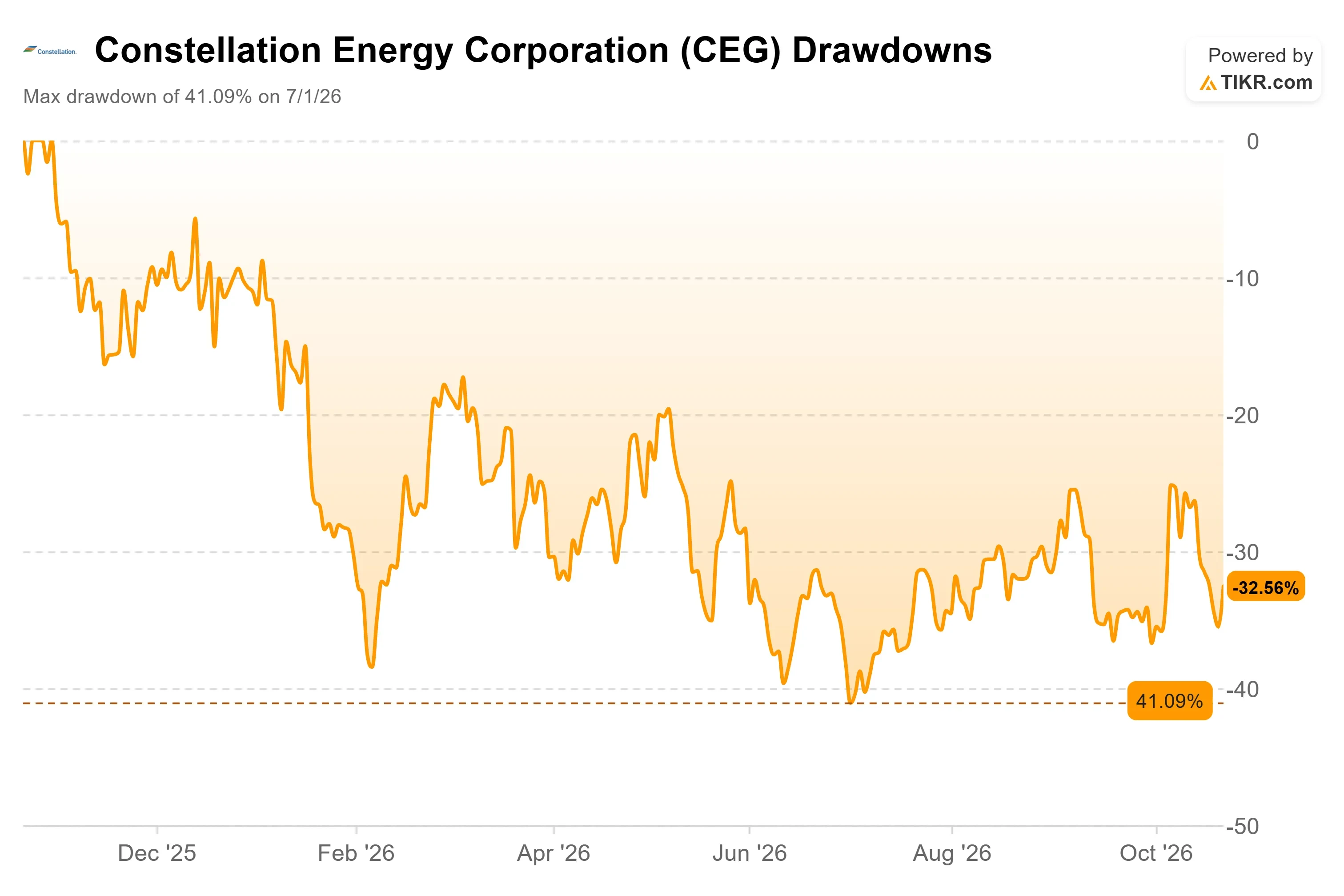
FERC Rejected PJM’s Data Center Plan Three Days After Google Signed
Just three days after Google, a subsidiary of Alphabet (GOOGL), finalized a 20-year, 890-megawatt power deal with Constellation on October 6, FERC issued a rejection of most of PJM’s “Bring Your Own Power” proposal. This framework included interim curtailment services and “bring your own new capacity” rules. FERC cited concerns that parts of the plan infringed upon state authority over retail rates and appeared discriminatory towards large energy consumers. PJM’s separate backstop procurement, also returned by FERC for revisions, failed to meet its initial September 30 start date.
This regulatory outcome contrasts with Constellation's management's desire for clarity. In August, CEO Joe Dominguez stated that "the worst thing for deal execution is ambiguity and uncertainty," expressing hope for regulatory resolution by year-end. Management maintained that existing contracts were not contingent on PJM and FERC decisions. The financial impact of FERC's rejection on the Google deal remains unclear due to undisclosed pricing.
Since September 30, analyst sentiment has seen a slight shift, with one new Buy, one Hold, and one Underperform rating added. The average target price has decreased to approximately $338 from $343, falling below Morgan Stanley's revised target of $378.
TIKR tracks 25 analysts on Constellation Energy. See the full breakdown of Buy, Hold, and Sell ratings, along with Wall Street’s revenue and earnings estimates, on TIKR. More than 500,000 investors use TIKR for stock research. See Constellation Energy’s Analyst Ratings
Musk’s Bottleneck Favors Plants Already on the Grid
Elon Musk outlined SpaceX's ambitious plan to deploy 20 gigawatts of power and cooling capacity by the end of 2027, utilizing diverse energy sources beyond gas turbines. He noted significant delays, ranging from 12 to 18 months, in securing specialized metals for turbine blades and vanes, as reported by TechCrunch. While Musk did not directly mention Constellation, his comments underscore a broader industry challenge.
Constellation's CEO, Joe Dominguez, echoed similar concerns in August, emphasizing a “peak capacity concern, not an energy concern.” He pointed out that existing power infrastructure often sits underutilized outside of peak demand hours. Dominguez warned that mandating new plant construction for every data center could hinder progress, suggesting that relying solely on new builds is not a viable short-term solution. He also noted that power uprates are not immediate fixes, with Google's project expected to be fully operational between 2028 and the end of 2032. Consequently, Constellation's existing nuclear generation capacity offers a near-term advantage.
The company's last quarterly report showed mixed results: GAAP EPS of $1.42 missed estimates of $2.30, and free cash flow was negative at $118 million. However, adjusted EPS of $2.55 surpassed the $2.28 estimate. Shares experienced a slight decline of 1.52% on August 6.
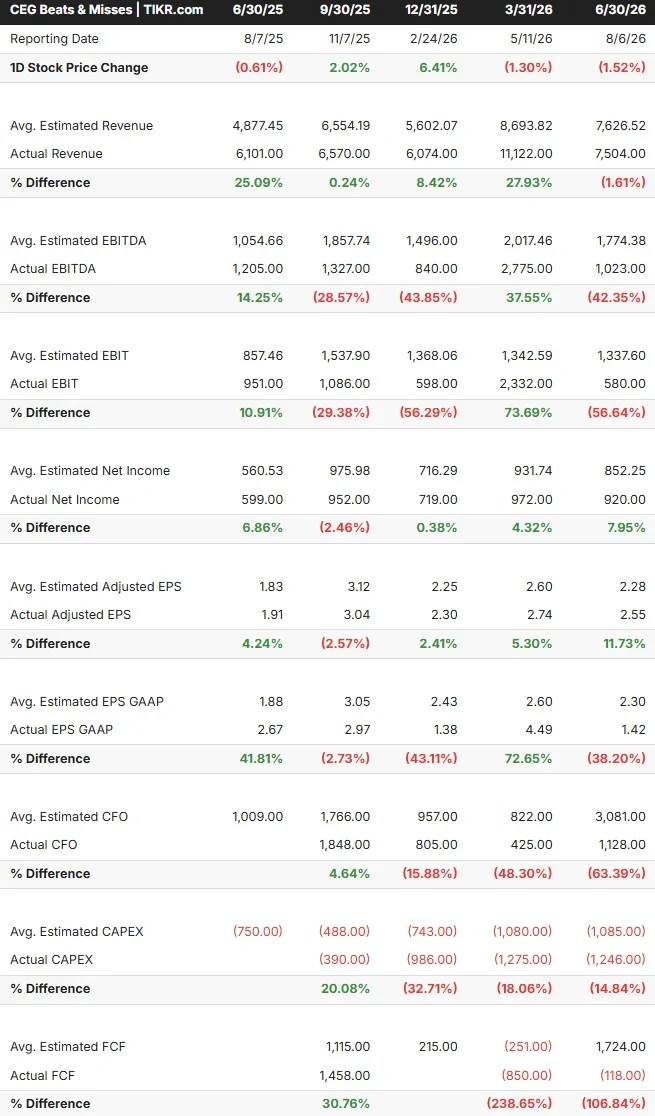
TIKR Advanced Model Analysis
- Current Price: $270.74
- Target Price (Mid): ~$465
- Potential Total Return: ~72%
- Annualized IRR: ~14% / year
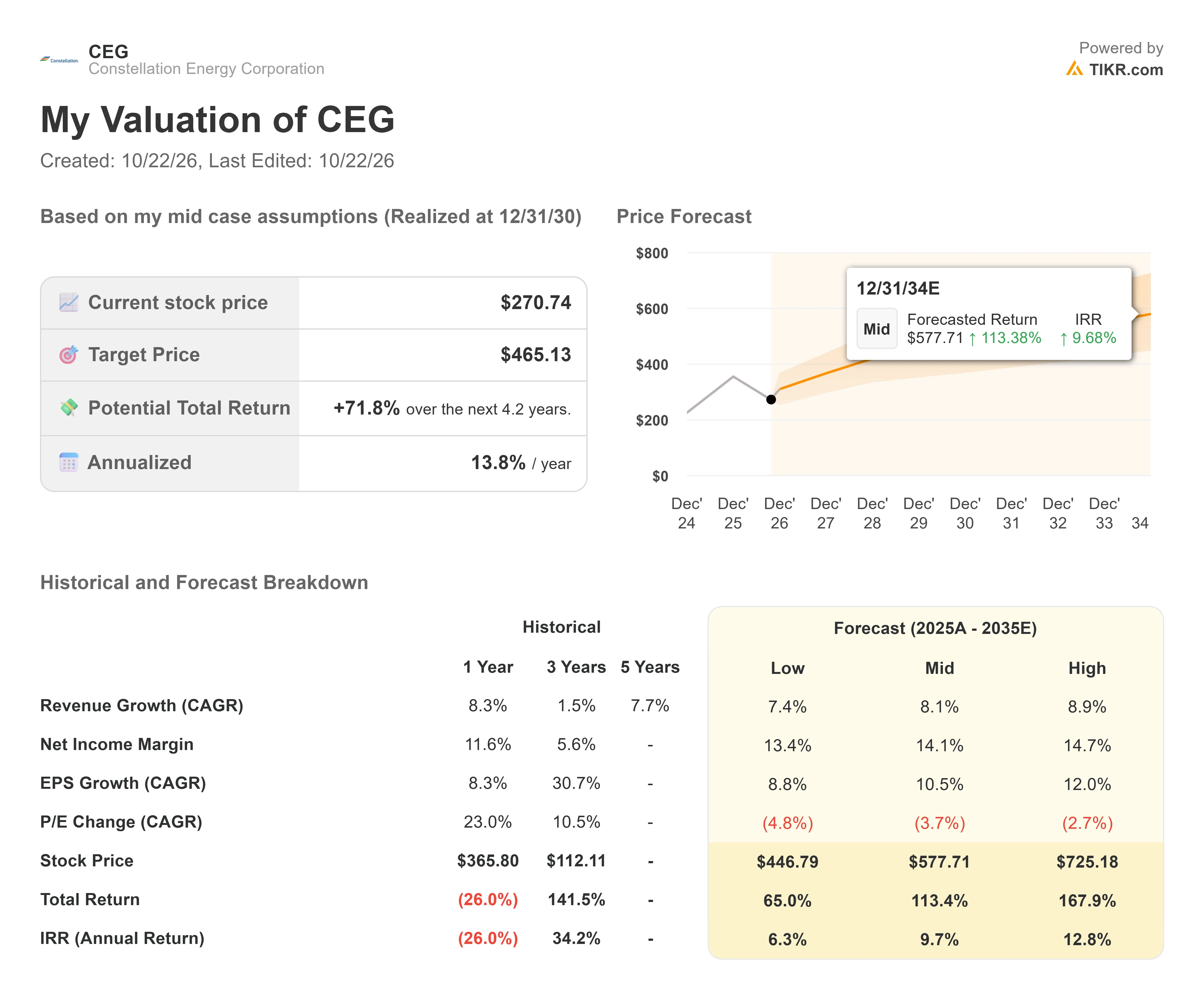
The TIKR model projects a mid-case scenario with a total return of approximately 72% over roughly 4.2 years, translating to an annualized IRR of about 14%. As of October 21, the stock was trading at approximately 22 times forward (NTM) earnings. Potential upside hinges on securing additional long-term contracts. Downside risks include delays in PJM's regulatory process, setbacks in the Crane facility's restart (targeted for the second half of 2027), or issues with the Google uprates.
Conclusion
Upcoming third-quarter results, expected in early November, will provide insight into whether the FERC rejection has impacted Constellation's contracting pace. Positive indicators would include maintaining guidance ($11.50 to $12.50) and securing additional megawatts beyond the Google deal. PJM's co-location response, anticipated around November, is another key event to monitor.
So what is Constellation Energy stock actually worth? TIKR's valuation model allows users to forecast future stock prices by inputting assumptions. Users can start with Wall Street consensus estimates or adjust inputs based on their own analysis. The tool is free to use.