Google and Georgia Power have forged an agreement to enhance the capacity of two nuclear power plants in Georgia, aiming to add 96 MW of clean energy to the state’s grid. This partnership, which requires regulatory approval, will allow Google to purchase zero-emission credits from the upgraded units at Plant Vogtle and Plant Hatch, aligning with its clean energy objectives and potentially saving Georgia Power customers approximately $900 million over the plants’ operational life.
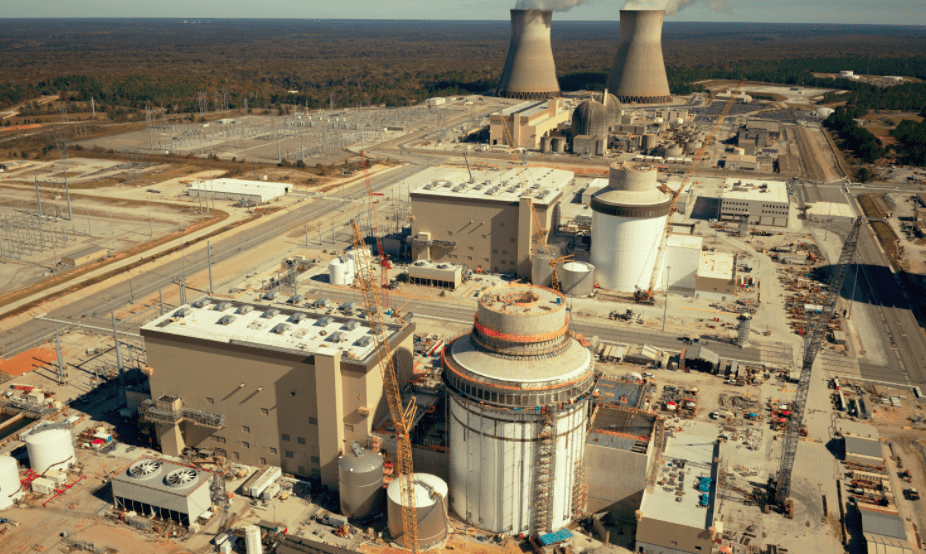
Tech powerhouse Google and electric utility Georgia Power have announced a groundbreaking collaboration aimed at bolstering the capacity of the utility’s nuclear power facilities. On September 21, the companies revealed an agreement under which Google will back power uprates at two key nuclear plants, projected to inject an additional 96 MW of generation capacity into Georgia’s electricity grid.
This strategic deal awaits final endorsement from the Georgia Public Service Commission (PSC) and focuses on extended power uprates (EPUs) for units at Plant Vogtle and Plant Hatch, both owned by Georgia Power. The utility recently submitted documents to the state PSC, outlining a new nuclear uprate tariff structure and seeking approval for an EPU at Units 1 and 2 of Plant Hatch, situated approximately 200 miles southeast of Atlanta in Baxley. Meanwhile, an EPU for Units 1 and 2 at Plant Vogtle, located near Waynesboro, roughly 150 miles east of Atlanta, has already received PSC approval as part of Georgia Power’s 2025 Integrated Resource Plan. Georgia Power anticipates that this agreement could deliver around $900 million in benefits to its customers throughout the operational lifespan of these units.
Under a novel subscription-based framework, Google will subscribe to the newly introduced NU-1 tariff. In return, Google will acquire zero-emission credits, which signify the carbon-free attributes of the nuclear energy generated from these power plant uprates.
Aaron Mitchell, senior vice president of Strategic Growth for Georgia Power, emphasized the significance of this partnership: “Many of our large customers have specific clean energy goals, and we continue to work with the Georgia PSC to create programs that not only help them meet their goals, but align with our Customer Protection Pledge, enhancing the reliability and resiliency of the power grid and creating savings for all customers. We appreciate Google’s continued leadership in this space and partnership in developing this program, which we see as the latest example of how large-load growth can benefit all electric customers.”
Lucia Tian, director of Advanced Energy Technologies at Google, echoed this sentiment: “Google data centers are long-term investments in the communities we call home, catalyzing local economic development and accelerating clean energy deployment. They also serve as a proof point for how we can unlock the significant opportunity to bring online new nuclear power through expanding the capacity of the existing nuclear fleet. This collaboration with Georgia Power ensures that digital infrastructure growth goes hand-in-hand with positive local impact, helping to deliver hundreds of millions of dollars in direct customer benefits and supporting a more affordable, clean, and reliable energy system for all Georgia residents.”
The utility clarified that EPUs involve increasing the electrical output of nuclear power units through strategic modifications to existing equipment like turbines, pumps, motors, and cooling systems. This process allows nuclear reactors to operate at higher licensed thermal power levels, consequently generating more heat that amplifies steam flow to the turbine generator. The outcome is greater electricity generation, all while leveraging the existing reactor fuel design and plant infrastructure.
Serving 2.8 million customers across Georgia, Georgia Power notes that the combined output from Plant Hatch and Plant Vogtle accounts for approximately a quarter of the state’s total electricity consumption. Both plants are expertly managed by Southern Nuclear, a specialized sister company of Southern Co. dedicated to nuclear operations.
This agreement marks Google’s second significant venture into nuclear energy this month. Earlier in September, the tech giant finalized its first international nuclear deal: a substantial $15.1-billion agreement with Fortum, a utility based in Finland. Through that deal, Google committed to purchasing up to 50% of the electricity generated by the Loviisa nuclear plant over a 22-year period, specifically to power at least three data centers in Finland.
—Darrell Proctor is a senior editor for POWER.