


While Wall Street obsesses over Big Tech’s massive AI investments, an equally significant story unfolds off the balance sheet. Google (Alphabet) has quietly accumulated over $150 billion in off-balance-sheet commitments, primarily through financial guarantees for data centers packed with its Tensor Processing Units (TPUs). This strategy accelerates its AI infrastructure buildout and competitive edge against Nvidia, but also rapidly expands its hidden financial exposure.
Wall Street has been captivated for the past two years by the colossal sums Big Tech is pouring into artificial intelligence. However, a far grander narrative might be taking shape, largely hidden from traditional financial statements.
A recent Nikkei investigation brought to light that the four leading hyperscale cloud providers have quietly amassed an staggering approximately $1.65 trillion in off-balance-sheet obligations. These commitments are primarily linked to the rapid expansion of data centers, power infrastructure, and extensive long-term lease agreements. Unlike conventional loans that appear directly on a company's balance sheet, these are sophisticated contractual guarantees and lease structures designed to accelerate AI development while minimizing reported debt.
/Alphabet%20(Google)%20Image%20by%20Markus%20Mainka%20via%20Shutterstock.jpg "The Hidden Cost of AI: Google’s 0 Billion Off-Balance-Sheet Bet on Chip Dominance")
Alphabet (Google) Image by Markus Mainka via Shutterstock
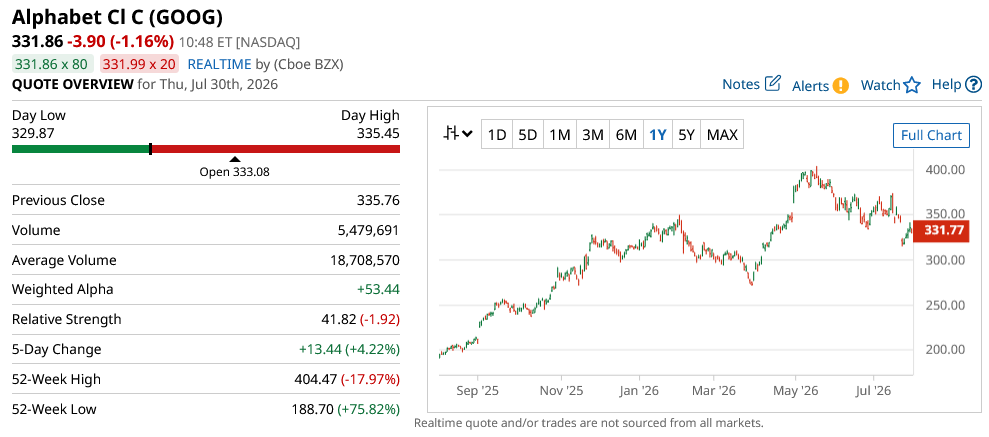
Alphabet's (GOOG) (GOOGL) Google now serves as a prime illustration of this evolving financing strategy. Alphabet is dramatically escalating its reliance on financial guarantees to bolster its AI infrastructure. This effectively places its substantial balance sheet behind billions of dollars in data center debt, all aimed at accelerating the adoption of its Tensor Processing Units (TPUs) in the fierce competition against Nvidia (NVDA).
The $44 Billion Figure Lurking in the Fine Print
According to The Information, Alphabet has committed to guarantee as much as $43.8 billion in data center lease payments, should tenants default. This figure represents a nearly sevenfold surge from just nine months prior, when it stood at a mere $6.5 billion. Google's maximum exposure has dramatically increased in less than a year.
The operational mechanism is relatively straightforward. AI cloud provider Fluidstack leases and develops data centers extensively equipped with Google's TPUs, subsequently renting this computing capacity to companies like Anthropic. Google's role is to guarantee these leases, enabling lenders to offer financing at more favorable rates because Alphabet ultimately assumes the financial responsibility if defaults occur.
This strategic arrangement offers Google a significant competitive edge. Instead of merely selling chips, it actively facilitates the financing of the essential infrastructure required for their deployment, thereby making TPUs a more appealing option as Nvidia continues to dominate the AI accelerator market.
From an accounting perspective, however, the figures present a stark contrast. Despite the potential $43.8 billion maximum exposure, Alphabet has recorded only an $815 million liability on its balance sheet. This sum represents management's estimated probable losses under these guarantees, adhering to standard accounting practices. This crucial detail underscores the necessity for investors to meticulously monitor these assumptions, particularly if any signs of deterioration begin to emerge.
Commitments Continue Their Ascent
These guarantees constitute just one facet of Google's ever-growing AI infrastructure commitments.
Alphabet's overall debt surged to $98 billion by June 30, a substantial increase from $23.6 billion just a year prior. The company also notably issued debt for the first time in over two decades, simultaneously reporting negative free cash flow during the second quarter—an unusual and significant milestone for an entity historically recognized as one of the market's most consistent cash generators.
To be clear, Alphabet is not currently grappling with a liquidity crisis. The company generated approximately $185 billion in operating cash flow over the preceding 12 months, comfortably surpassing even its most substantial guarantee commitments. This robust financial position is why many investors currently view the implemented strategy as entirely manageable.
Nevertheless, the pipeline of commitments continues to swell. Beyond the existing $43.8 billion in guarantees, Google has provisionally committed an additional $24.1 billion in future guarantees, pending finalization of terms. Furthermore, it holds $85.2 billion in signed data center leases that have not yet commenced, alongside another $7.6 billion in power-related guarantees.
When aggregated, Alphabet's off-balance-sheet commitments specifically tied to its extensive AI infrastructure buildout now collectively exceed $150 billion. (Intriguingly, Nikkei's estimate places this figure closer to an even more significant $250 billion).
Google Isn't Shouldering All Risk Without Reward
It's important to note that these financial guarantees are not acts of corporate altruism. In several instances, Google has received equity warrants, granting it the opportunity to participate in the upside if the associated data center developers achieve prosperity. Alphabet's official filings indicate that these warrants could ultimately represent approximately 14% of TeraWulf (WULF) and 5.4% of Cipher Digital (CIFR). This provides Alphabet with an additional avenue to capitalize on the burgeoning AI infrastructure boom, extending beyond simply selling its TPUs.
However, not every transaction adheres to this specific model. Hut 8's (HUT) substantial approximately $7 billion lease arrangement, coupled with an additional $2 billion in related commitments, reportedly did not include equity warrants. Nevertheless, according to a source familiar with Alphabet's broader strategy, similar structures without warrants are unlikely to become the prevailing norm.
Key Takeaway for Investors
Google's expanding guarantee business does not necessarily signal an immediate red flag. With robust annual operating cash flow hovering around $185 billion, Alphabet possesses the formidable financial strength required to comfortably support these commitments. Furthermore, these strategic guarantees undeniably help accelerate the adoption of TPUs within an increasingly competitive AI market.
Yet, investors should not overlook the alarming pace at which these obligations are accumulating. Google's maximum guarantee exposure has surged from $6.5 billion to an imposing $43.8 billion in just three quarters. Concurrently, its broader AI-related off-balance-sheet commitments have escalated beyond $150 billion. When contextualized with the Nikkei estimate that the four largest hyperscalers collectively bear approximately $1.65 trillion in similar obligations, it becomes abundantly clear that a substantial portion of the ongoing AI buildout is being financed outside the conventional debt markets that investors typically scrutinize.
Instead of exclusively fixating on the headline guarantee amounts, astute investors should direct their attention to the fair-value liability that Alphabet records each quarter. Should this figure begin to rise materially faster than management's projections, it could serve as one of the earliest and most critical indicators that this increasingly pervasive financing strategy is becoming significantly riskier than the market currently perceives.