



Global markets are reacting to mixed signals as U.S. futures dip slightly after a strong first half, while the Japanese Yen plummets to a new 40-year low against the dollar, potentially signaling intervention. European stocks are broadly lower, with particular concerns in the auto industry, even as Asia presents a varied picture with robust South Korean exports and optimistic Japanese business sentiment. Precious metals are also experiencing a downturn amidst ongoing interest rate uncertainty.
U.S. futures experienced a slight dip early Wednesday, setting a cautious tone for the new month following impressive gains in the first half. Dow Jones Industrial Average futures declined by 170 points (0.33%), S&P 500 futures shed 0.29%, and Nasdaq 100 futures dropped 0.34% by 2:19 a.m. ET.
This ease follows a robust first half of 2026 for major U.S. averages. The Dow recorded an 8.9% rise, its best since 2021. The S&P 500 climbed 9.6%, and the tech-heavy Nasdaq Composite surged 12.8%. Small-cap Russell 2000 outperformed, gaining nearly 22% for its best first-half performance since 1991, fueled by a significant rally in chip and AI-related stocks, which added $2 trillion in market cap to Micron, Intel, and Advanced Micro Devices in Q2 2026.
Paul Hickey, co-founder of Bespoke Investment Group, expressed long-term optimism for the semiconductor sector but advised caution due to its recent rapid ascent. "This bull market is an AI-driven bull market, that's the theme. If this bull market is going to continue, it's going to be led by tech and probably semis, but they don't have to beat consistently, and you can't go in that kind of pattern for good," Hickey noted on CNBC's "Closing Bell: Overtime."
Yen Weakens to 40-Year Low; Global Markets Mixed
The Japanese yen continued its slide, reaching a new 40-year low against the dollar at 162.28 per dollar on Wednesday, as per LSEG data. This extended losses from the previous session, prompting traders to remain watchful for potential intervention by Japanese authorities.

Interactive chart showing Japanese Yen performance (chart not directly embeddable, described as placeholder).
Asia-Pacific markets opened mixed. Japan's Nikkei 225 rose 1.79%, and the Topix gained 1.07%. South Korea's Kospi advanced 1.52%, though the small-cap Kosdaq fell 0.42%. Australia's S&P/ASX 200 was slightly down by 0.05%, and China's CSI 300 remained flat. Hong Kong markets were closed for a holiday.
Federal Reserve Chairman Kevin Warsh is scheduled to speak at the European Central Bank Forum in Sintra, Portugal, amidst expectations that the Fed could hike interest rates to combat inflation, as he works to remake the central bank's monetary policy. Upcoming economic data includes June's ADP employment survey, ISM manufacturing, and global PMI manufacturing readings.
European Stock Markets Start July in the Red

Traders work at the New York Stock Exchange on June 29, 2026.
European stock markets opened negatively for the new month. The pan-European Stoxx 600 dropped 0.19% shortly after 8:00 a.m. in London, with most sectors and major bourses in the red. The DAX in Frankfurt was up 0.12%, but London's FTSE 100 fell 0.28%, Paris' CAC 40 was down 0.35%, and Milan's FTSE MIB slipped 0.42%.
Volkswagen's Struggles Highlight Strain on Europe's Auto Industry
Volkswagen's challenges are indicative of broader pressures on Europe's carmakers, according to Thomas Besson, head of automotive research at Kepler Cheuvreux. Besson highlighted limited global demand growth and intensifying competition from Chinese manufacturers. "We are seeing substantially more competition than expected from Chinese automakers because their home market is much softer than expected," Besson told CNBC. The Stoxx Europe 600 Autos Index was among the worst-performing sectors in Q2, shedding 5.08%, with Volkswagen down 18.87%.
Interactive chart showing Volkswagen performance (chart not directly embeddable, described as placeholder).
Volkswagen recently announced intentions to cut 100,000 jobs and close four German plants. However, Besson noted the company's plans to boost its presence in the Chinese electrified market, potentially allowing it to gain market share.
Precious Metals Decline as Interest Rate Uncertainty Lingers

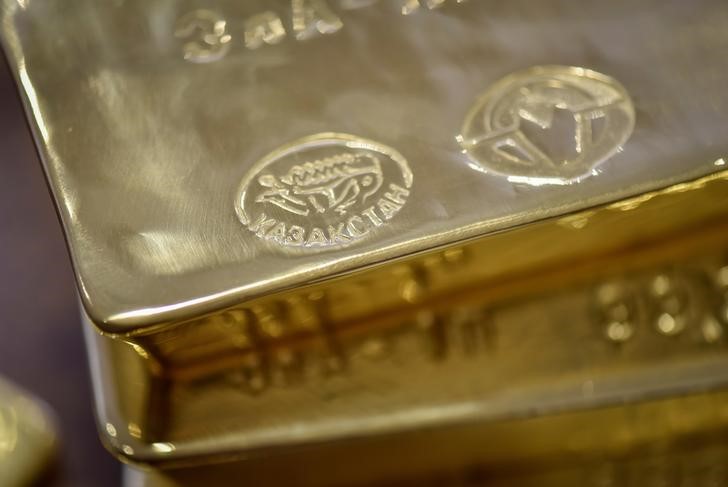
Gold prices held steady on Wednesday as market participants squared positions ahead of U.S. President Donald Trump's sweeping reciprocal tariff plans.
Gold futures fell 1.19% to $3,990.70, and spot gold was 0.80% lower at $3,975.30, marking July's start in negative territory. This follows bullion's worst quarter since Q2 2013. Silver futures were down 2.63% at $57.91, and spot silver shed 1.94% at $57.47. Investors are retreating from precious metals due to expectations of global central bank rate hikes in response to inflation exacerbated by the Middle East conflict, making non-yielding assets less attractive.
Other Key Market and Corporate News
Indonesia's benchmark Jakarta Composite Index surprisingly rose 1.39% after a court sentenced former Education Minister and Gojek co-founder Nadiem Makarim to 10 years in prison for a corruption case related to Google Chromebook procurement.
Anthropic announced a reversal from the Trump administration, restoring access to its AI models, Claude Fable 5 and Mythos 5, to global users. Fable 5 is available on Claude.AI and Claude Code, with expanded access for Pro, Max, Team, and selected enterprise plans. Mythos 5 access was restored for some U.S. organizations following government approval, with further expansion planned through its Glasswing cybersecurity initiative. Access will also be re-enabled on Amazon Web Services, Google Cloud, and Microsoft Foundry.
South Korea reported massive export growth in June, with shipments up 70.9% year-over-year, its fastest rate since 1978, significantly beating economist expectations. Imports also expanded by 30.1%.
Oil prices rose Wednesday, recovering from earlier losses after Brent crude posted its biggest monthly decline since March 2020. Brent crude futures for September gained 0.52% to $73.33 a barrel, while U.S. West Texas Intermediate futures for August advanced 0.66% to $69.96 per barrel. This recovery comes amidst easing tensions in the Strait of Hormuz, shifting focus back to supply-demand fundamentals, even as mixed signals surround Donald Trump's proposed Iran-U.S. peace talks.
Japanese business sentiment among large manufacturers climbed to its highest in over six years, reaching 22 in the Bank of Japan's quarterly Tankan survey, surpassing expectations. Large non-manufacturing businesses also showed strong optimism at 37, a multi-decade high.
Constellation Brands shares rose 4% in extended trading after beating fiscal first-quarter earnings and revenue expectations. The beverage producer reported adjusted earnings of $3.43 per share on $2.43 billion in revenue, exceeding analyst estimates.
SpaceX received an 'outperform' rating and a $190 price target from Wedbush technology analyst Dan Ives. Ives described SpaceX as "much more of an AI play," positioned to become a major hyperscaler.

VIDEO6:08 Dan Ives discusses SpaceX's potential as an AI play on "Fast Money."
Nike stock fell more than 2% in extended trading despite beating fiscal fourth-quarter earnings and revenue estimates. The decline was attributed to a 12% drop in sales in the Greater China market, which came in at $1.30 billion, though still exceeding expectations.
S&P 500 futures opened little changed on Tuesday night, with futures tied to the broad market index and Nasdaq futures trading near the flatline, while Dow futures shed 0.2%.