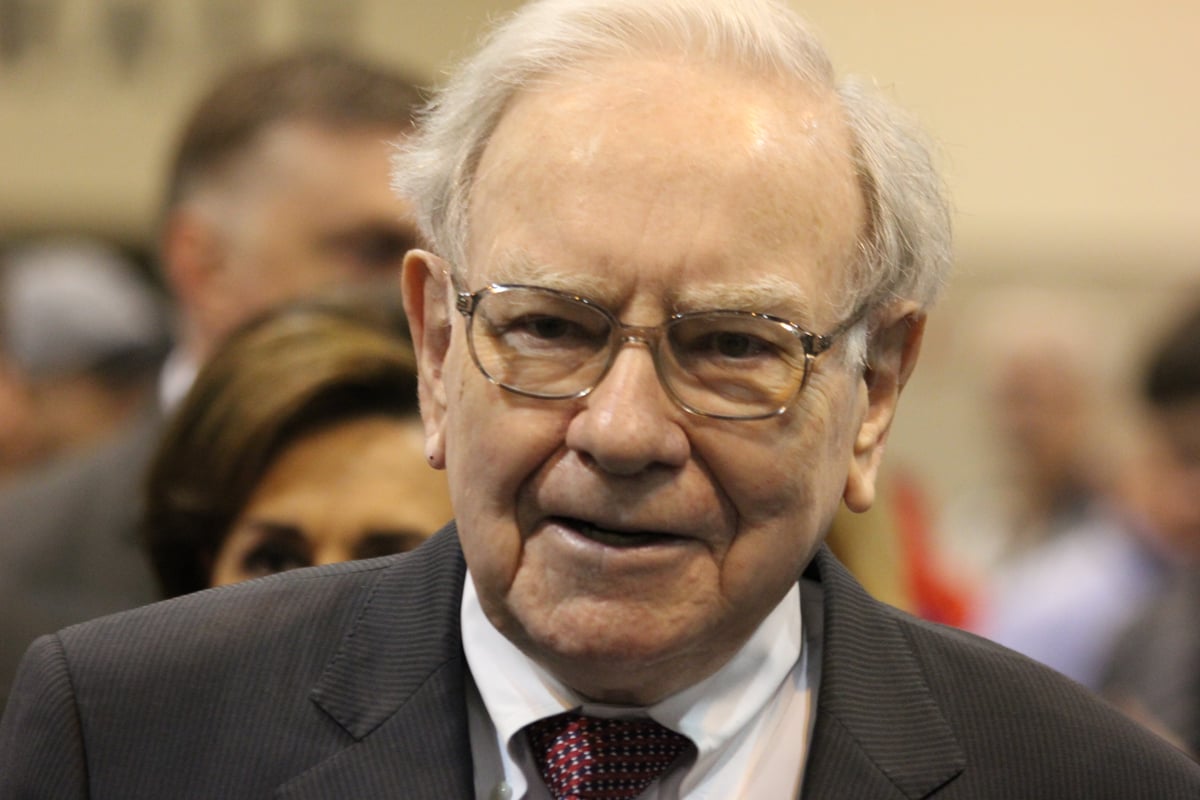
Legendary investor Michael Moritz, known for backing Google and PayPal, reveals that most investors fail because they are “congenitally incapable of doing nothing,” constantly trading instead of allowing compounding gains to build wealth. Charlie Munger credited Moritz’s success to temperament over intellect, highlighting his ability to hold positions through market fluctuations. Using Amazon as a prime example, Moritz illustrates how selling during all-time highs — a seemingly logical move — or panicking during heavy investment phases, like Amazon’s $200 billion AI capex, prevents investors from reaping the long-term rewards of fundamentally strong companies like AWS, which has a nearly $500 billion backlog and CEO Andy Jassy predicts could become a “trillion dollar annual revenue business.”
In the high-stakes world of Wall Street, where constant activity often equates to perceived productivity, legendary investor Sir Michael Moritz offers a counterintuitive lesson: the secret to true wealth lies in doing nothing. With a track record of backing tech giants like Google, YouTube, PayPal, and Stripe during his 38-year tenure at Sequoia Capital, Moritz has a simple, yet profound, explanation for why most investors fail to accumulate significant wealth: “Most investors are congenitally incapable of doing nothing. They just have to do something.”
According to Moritz, this incessant urge to act is the primary problem. Investors frequently trim positions or sell entirely based on fleeting fears — a concerning headline, a stock hitting a round number, or simply a gain that feels too substantial to risk losing. While each transaction might feel productive in the moment, over time, this constant trading erodes the powerful compounding effect that is the true engine of wealth creation.
Munger's Nod to Moritz's Temperament
The profound wisdom of Moritz’s approach was famously highlighted by Charlie Munger, the late Vice Chairman of Berkshire Hathaway. When asked which investors were truly worth interviewing, Munger singled out Moritz. Munger attributed Moritz’s success not to superior intellect, but to his extraordinary temperament. The host of Richer, Wiser, Happier from The Investor’s Podcast Network recounted Munger’s praise: Moritz “was not the leading intellectual, but temperamentally he was able to hang on to everything he did better than all his brighter partners.” Moritz expressed his sincere flattery at Munger’s high regard.
The Amazon Conundrum: A Test of Patience
The essence of Moritz’s argument often comes to light with companies like Amazon (NASDAQ:AMZN). Moritz poses a question that routinely stumps seasoned investors: “In the 30 years or so that Amazon has traded as a public company, how many days has that stock traded at an all-time high?” This query stops people cold because an all-time high often feels like an ominous ceiling, suggesting a stock is overextended and ripe for a sell-off. Yet, for a business with consistent compounding growth, new all-time highs are a regular occurrence, each subsequently surpassed as the company expands.
Amazon Price Target Chart (24/7 Wall St.)
Every one of those record highs presented a moment where selling felt rational, only to prove costly to those who acted on that instinct. Over the last decade, Amazon has delivered a staggering 531.6% return, despite shorter periods of slower growth, like the 59.6% gain over the past five years. It's during these challenging stretches, Moritz observes, that most investors lose their nerve. “There is nothing that beats the compounding power of a well-positioned company. But most people are unable to recognize that and capitulate, give up, are frightened,” he explains, leading to years of regret.
Holding Through Amazon's Ambitious Investments
Amazon is currently presenting another test of investor discipline. The company has committed approximately $200 billion to capital expenditures in 2026, investing heavily in AI infrastructure, custom chips, robotics, and Amazon Leo satellites. This massive outlay has pushed trailing free cash flow into negative territory, registering at -$7.6 billion — a red flag for any impatient shareholder.
However, the underlying operating results paint a compelling long-term picture. In its second-quarter release, Amazon reported robust revenue of $200.61 billion, up 19.6%, and operating income soaring 43% to $27.46 billion. AWS (Amazon Web Services) revenue surged by 37% to $42.23 billion, and its backlog alone reached an impressive $496 billion. CEO Andy Jassy envisions AWS potentially becoming “a trillion dollar annual revenue business for us in time,” further noting that data centers continue to generate returns for “30-plus years.” This long-term horizon heavily favors patient investors and penalizes those who sell prematurely during significant investment phases.
Amazon Earnings Explorer (24/7 Wall St.)
Embracing Moritz’s Long-Term Discipline
Moritz’s investment philosophy provides a crucial filter: before making any sell decision, investors should rigorously question whether the rationale is tied to the company’s fundamental future prospects or merely reflects movements in its stock price. For Amazon, the critical business questions revolve around whether its results will meet third-quarter guidance (net sales of $197.0 billion to $202.0 billion; operating income of $22.5 billion to $26.5 billion) and if the substantial capital expenditure cycle will ultimately translate into the promised free cash flow. Under Moritz’s astute logic, a new all-time high for a stock offers no insight into either of these fundamental business drivers.
Subscribe to our newsletter to get our newest articles instantly!
MARKET VOWS NEWSLETTER
Stop entering after the move is obvious.
Most traders wait for momentum, confirmation, and headlines. By then, the edge is gone.
Market VOWS shows you where behavior is becoming constrained — where capital is being forced, optionality is collapsing, and price is beginning to be imposed.