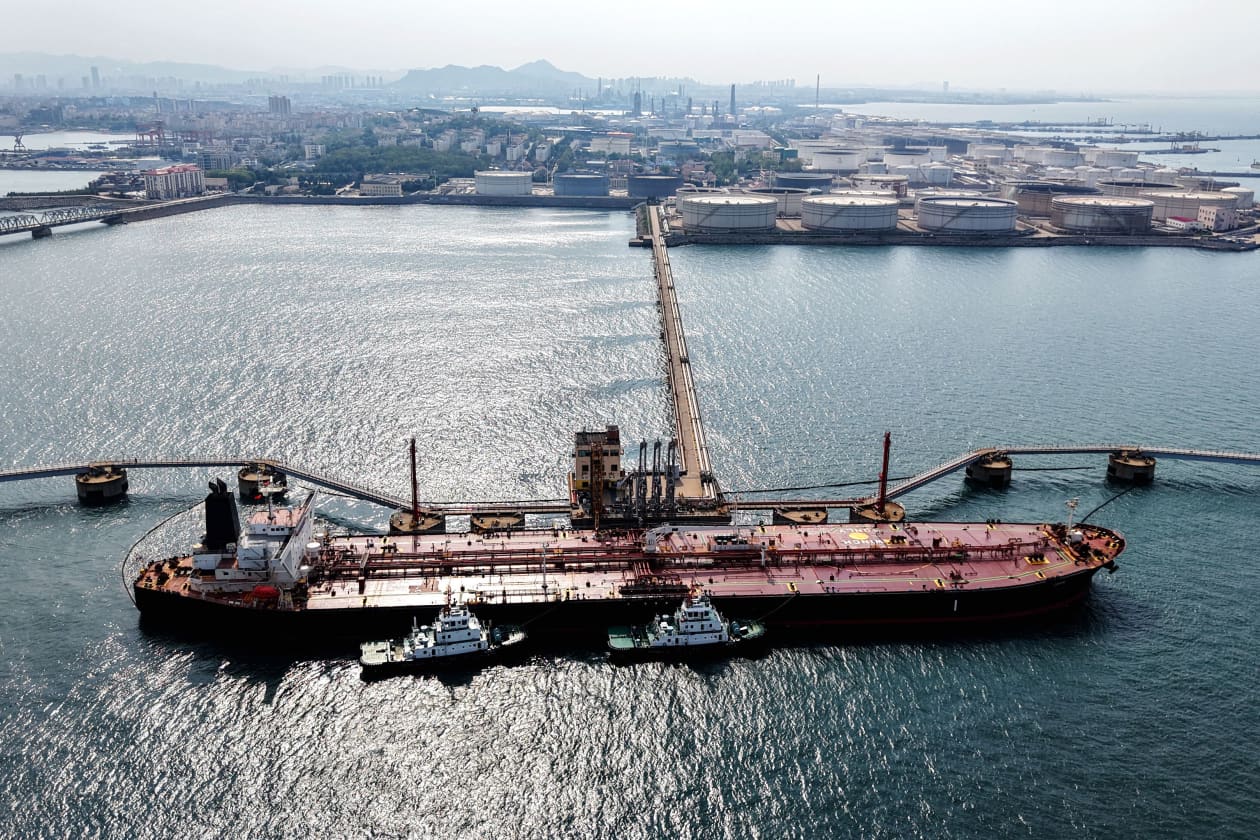
Tanker stocks are the year’s surprising top performers, significantly outshining AI and tech stocks. Geopolitical conflicts are forcing longer shipping routes, increasing demand and allowing tanker companies to charge premium rates for transporting oil and fuel. This trend is reflected in the substantial year-to-date gains of ETFs like the SonicShares Global Shipping (BOAT) ETF and individual companies such as Okeanis Eco Tankers and Dorian LPG.

Experts point to disruptions like the Strait of Hormuz blockade, sanctions on Russian oil, and Houthi attacks in the Red Sea as key drivers, stretching supply chains and increasing operational risks. These factors, combined with improving balance sheets of shipping companies, are creating a robust environment for tanker investments.
READ MORE FROM CNBC
The hottest investment of the year isn't in the buzzy world of artificial intelligence, but rather in the unglamorous yet increasingly vital sector of tanker stocks. Driven by a confluence of global conflicts and trade route disruptions, shipping companies specializing in the transport of oil and fuel are experiencing a remarkable surge, with some ETFs and individual stocks posting gains of over 100% year-to-date.
The SonicShares Global Shipping (BOAT) ETF, for instance, is up a staggering 63% year-to-date and 35% quarter-to-date, marking its best performance since its inception in 2021. This dramatic rise far eclipses the modest gains seen in the technology sector, with State Street's Technology Sector SPDR ETF (XLK) only managing a 3% increase in the third quarter and 36% for the year.
Several prominent tanker companies are leading this charge. Okeanis Eco Tankers, a crude oil transporter, has seen its stock more than double year-to-date and climb over 60% this quarter. Dorian LPG, specializing in liquified petroleum gas, is up over 121% year-to-date and 58% this quarter. Nordic American Tankers, an operator of double-hull oil tankers, has also more than doubled its stock value year-to-date, with a 43% increase in the current quarter.
According to Chris Robertson, Deutsche Bank's director of LNG infrastructure and maritime shipping, this surge is attributed to the concept of "expanding tonne miles." Essentially, geopolitical disruptions are forcing oil and fuel to travel longer, less efficient routes. With ships occupied for extended periods, the availability of vessels for new cargoes diminishes, allowing tanker companies to command premium prices.
Robertson identifies three key geopolitical factors fueling this trend:
- The ongoing blockade around the Strait of Hormuz, a critical chokepoint for oil and refined product shipments.
- Sanctions imposed on Russian crude and refined products following the invasion of Ukraine.
- Attacks by Yemeni Houthi rebels on shipping vessels in the Red Sea.
These interconnected tensions are stretching global supply chains, increasing transit times and reducing overall efficiency. Freight rates, the cost customers pay to move oil by ship, are directly impacted by these longer routes and security concerns. Ship owners are demanding higher premiums to assume the risks associated with loading cargoes in high-risk areas.
"As long as the threat of attack remains in place, rates will continue to be very robust," Robertson stated, emphasizing that the elevated shipping costs are likely to persist even as oil exports from the Middle East potentially recover.
Beyond the geopolitical drivers, Robertson also highlighted the improved financial health of many tanker companies. "Many of the publicly listed tanker companies have dramatically improved their balance sheets in paying down their debt," he noted. This deleveraging translates to lower interest expenses, freeing up more capital for shareholder returns through dividends and share repurchases. For example, International Seaways, a major global tanker company, returned 85% of its net income to shareholders for the third consecutive quarter, as reported on August 10.
While the spot market may be near its peak, the underlying factors suggest that elevated shipping costs are here to stay. The continued risk of attacks on vessels ensures that tanker operators will continue to demand higher premiums for navigating war-risk zones.