


In a competitive landscape among tech giants, Alphabet emerges as the superior investment choice over Amazon and Microsoft. While both Amazon and Microsoft face significant challenges in cloud market share and evolving consumer preferences, Alphabet is demonstrating robust growth across its core businesses, including search advertising, cloud services, and its mobile operating system, Android.
Alphabet’s strategic focus on AI and its strong position in key technology sectors like cloud computing and mobile platforms provide it with a distinct advantage in the current market environment, positioning it for sustained future success.
In the long run, investors might find success with any of the tech titans: Alphabet (GOOGL, GOOG), Amazon (AMZN), or Microsoft (MSFT). However, if your portfolio currently has room for only one of these "Magnificent Seven" members, Alphabet stands out as the most compelling buy. Here's a detailed look at why.
Assessing Microsoft and Amazon's Challenges
While owning Amazon or Microsoft is far from a losing proposition, both face unique headwinds that could hinder their growth in the current market. Microsoft, despite its foundational role in personal and professional computing, is experiencing diminishing relevance in both home and office environments. While its productivity suite, like Word and Excel, remains popular, Microsoft Office's dominance is being challenged by the more flexible Google Workspace. Furthermore, Microsoft is losing ground in the AI assistant race. Its Copilot app, while integrated with Microsoft 365, has seen many users added as part of existing subscriptions rather than through direct demand. The free consumer version trails significantly behind ChatGPT in market share. Statcounter data also reveals a decline in Windows' market share, with Apple's OS and Linux gaining traction, leading to two consecutive quarterly revenue drops for Windows. Despite a thriving cloud business boosted by AI, Microsoft faces challenges across multiple fronts, including a 10% revenue slump in its video gaming arm.

Image source: Getty Images.
Amazon's primary concern lies in its aggressive capital expenditure plans, particularly for AI infrastructure, with no guarantee of reversing the decline in its cloud computing market share. Despite a projected $220 billion in capital expenditures for fiscal 2026, Synergy Research Group data shows Amazon Web Services' market share has dropped from a 2020 peak of 34% to 28% in Q2 of this year. Microsoft Azure has also seen a decline, while Google Cloud has been steadily gaining share. Both tech giants are prioritizing cloud opportunities driven by AI, but their current performance in this critical sector is not meeting expectations.
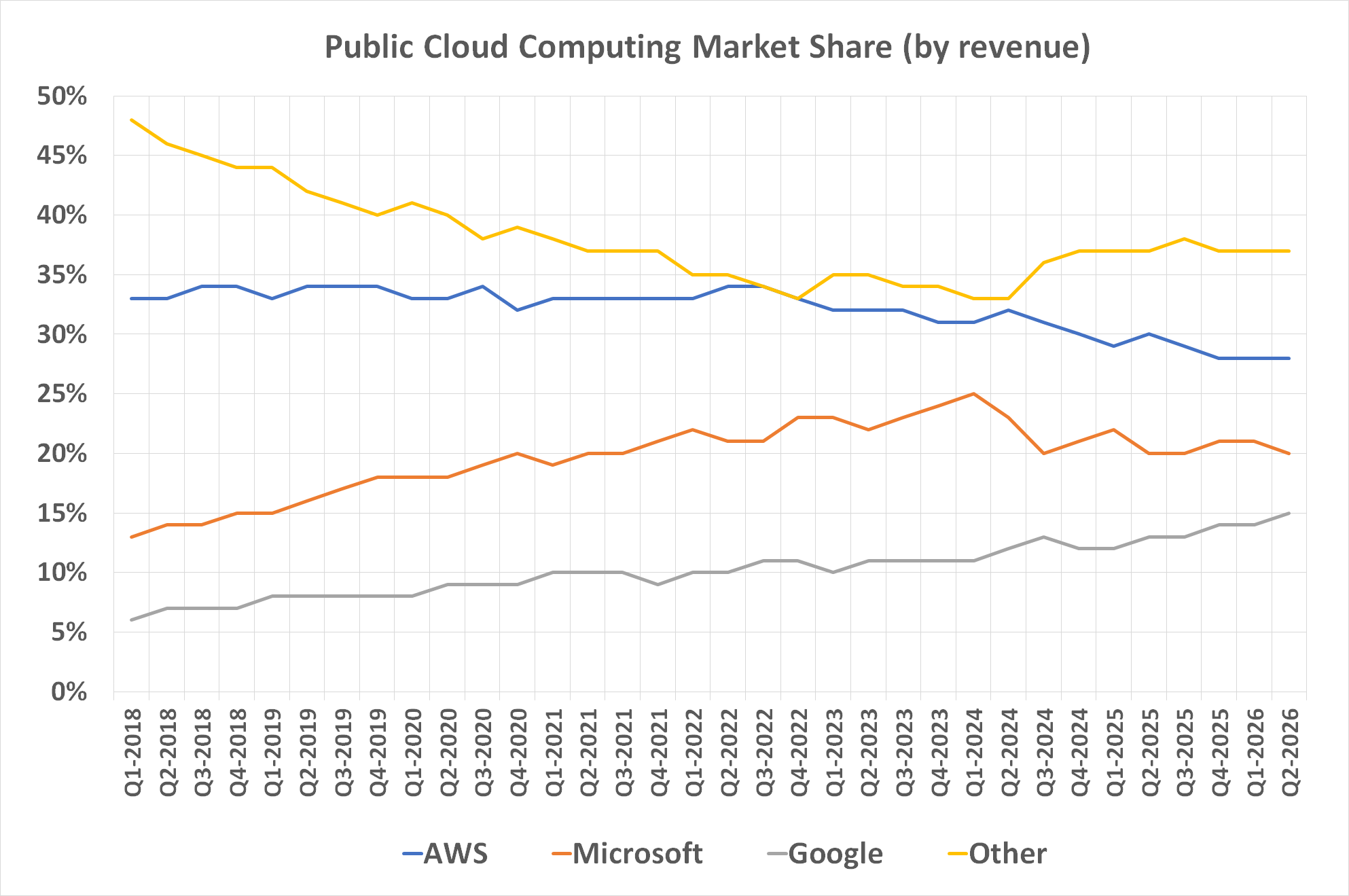
Data source: Synergy Research Group. Chart by author.
Alphabet's Strong Performance Across the Board
Alphabet, on the other hand, is excelling in the cloud computing sector, reporting an impressive 82% year-over-year revenue growth for its cloud division in the second quarter. Its success is clearly being fueled by its AI initiatives. Beyond the cloud, Alphabet's other core businesses are also performing robustly. Google's advertising revenue, including YouTube, saw a 14% increase in the second quarter, with search advertising specifically up 15%. Subscription and device revenue also grew by over 15% year over year. The company's mobile operating system, Android, continues to maintain its leading 67% share of the global mobile OS market, and YouTube has surpassed Netflix as the most-watched streaming platform in the U.S. in terms of total viewing time.

NASDAQ: GOOG
Key Data Points
The Current Environment Favors Alphabet
The current market conditions and the foreseeable future strongly favor Alphabet. The personal computing landscape has become more democratized, with mobile devices serving as viable alternatives to traditional desktops and laptops, and a broader adoption of operating systems beyond Windows. Amazon's historical lack of in-house technological development has also contributed to its cloud business losing ground to Alphabet. Alphabet, conversely, entered this era of connected computing in an ideal position. Google Search acts as a perfect gateway for its AI-powered assistant, Gemini, while the growing demand for mobile computing has solidified Android's crucial platform status. Moreover, rising streaming subscription costs are making YouTube an increasingly attractive free alternative. While these conditions may eventually change, they are expected to provide sustained tailwinds for Alphabet in the near to medium term.






