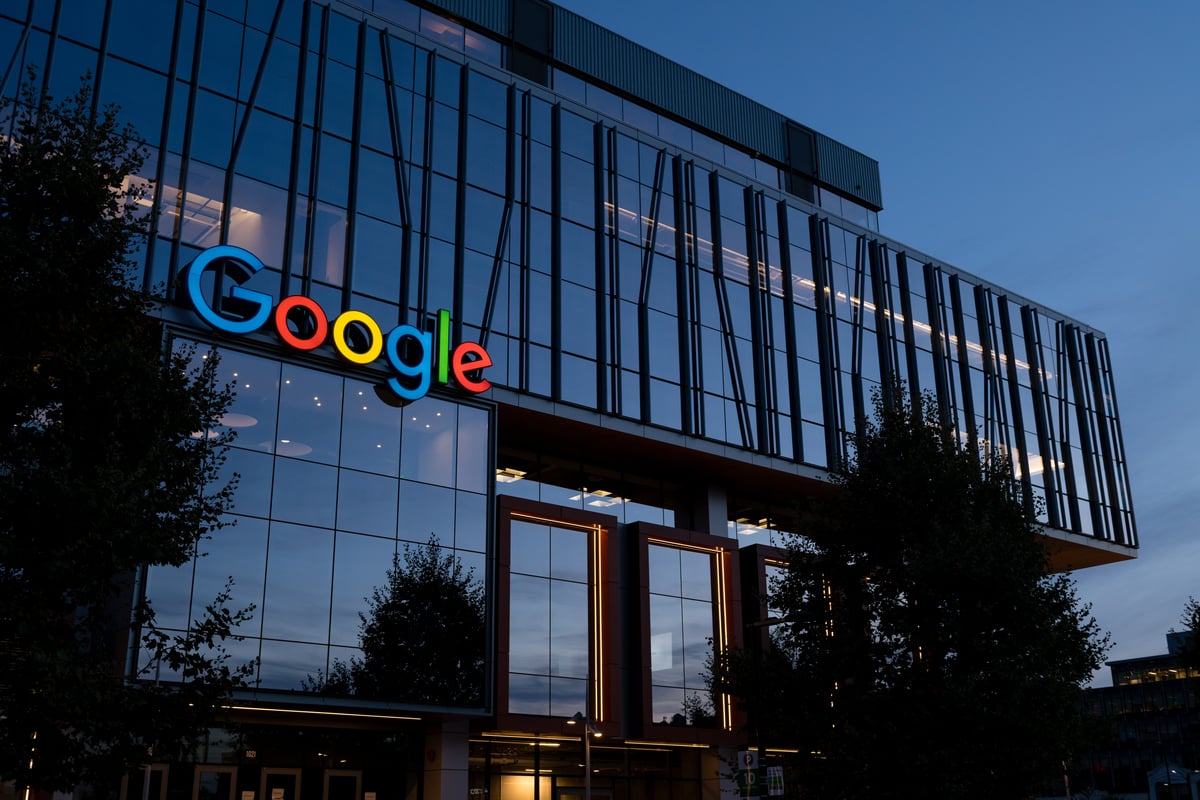
In a significant development for artificial intelligence regulation, President Donald Trump has signed an executive order mandating the use of the term “super intelligence” and encouraging a unified approach. Tech industry leaders from major companies like Google, Meta, and OpenAI have committed to developing their own safety measures through the “White House Accord on Super Intelligence,” though they acknowledge the potential need for future legislation.
Meanwhile, OpenAI has announced a delay in its IPO, citing confidence in safety decisions, and the U.S. Treasury market is experiencing shifts with a record share held by hedge funds, raising regulatory concerns.
Hello, this is Leonie Kidd coming to you from London. Welcome to another edition of CNBC's Daily Open.
AI will be marking its own homework — for now.
SpaceX CEO Elon Musk (top) looks on as US President Donald Trump speaks to the press after a meeting with technology executives about artificial intelligence at the White House in Washington, DC, on Sept. 29, 2026. Kent Nishimura | AFP | Getty Images
The bosses of the six biggest tech groups have agreed to develop their own safety measures, a win for the Trump administration.
However, the signers also acknowledged that "over time, it may make sense to codify these steps into laws or regulations."
Read on for more.
What you need to know today
The bosses of the six most significant American companies in AI (namely Google, Meta, Nvidia, OpenAI, Anthropic, Tesla and SpaceX) have signed a document called the "White House Accord on Super Intelligence."
The accord outlines how its signatories "believe that every company is responsible for developing its own technology safely and in a way that builds trust."
Tech bosses have agreed to meet regularly to implement "robust internal processes and controls to ensure that their technology behaves as intended."
However, it also says that, over time, it may "make sense to codify these steps into laws or regulations."
The move comes as President Donald Trump also signed an executive order commanding all government departments and agencies to use the term "super intelligence" instead of artificial intelligence.
IPO delayed
Staying with AI, OpenAI has said it will only go public when the time is right, and the group is "confident in its safety decisions."
CNBC's Kate Rooney sat down with Sam Altman from OpenAI DevDay 2026 to discuss safety concerns and the company's expected plans to go public. Watch that full interview here.
OpenAI is not the only company delaying its IPO plans. Biometric ring maker Oura has also postponed its listing due to "uncertain" market conditions.
Treasury tensions
The U.S. 30-year Treasury yield has hit its highest level since 2002. This comes as experts have told CNBC that hedge funds are holding a record share of the $30 trillion Treasury market. Regulators are warning that the increased hedge fund participation could come with fresh risks.
Later on Wednesday, the Federal Reserve's preferred inflation gauge is expected to show a continuation of price pressures.
When September ends
Wednesday marks the last day of September and the third quarter. Market performance has been mixed in both timeframes. For the month, the S&P 500 and Dow are tracking for declines while the Nasdaq is up more than 1%. For the quarter, the S&P 500 and the Nasdaq are up 2%, while the Dow is off nearly 2%.
Futures are inching higher on Wednesday, following a broadly positive handover from Asia.
— Leonie Kidd
And Finally...
Goldman Sachs CEO succession planning faces one big problem
Goldman Sachs is on top of Wall Street right now, advising on more than $1 trillion in merger deals and generating more than $12 billion in equities revenue in the first six months of the year alone.
Those records make it all the more striking that Goldman's board has reportedly discussed replacing CEO David Solomon, 64, with president John Waldron, 57, as early as next year.
The succession plan, which would elevate Solomon to executive chairman, could be voted on by the bank's board in coming months, The Wall Street Journal reported late Monday.
Subscribe to our newsletter to get our newest articles instantly!
MARKET VOWS NEWSLETTER
Stop entering after the move is obvious.
Most traders wait for momentum, confirmation, and headlines. By then, the edge is gone.
Market VOWS shows you where behavior is becoming constrained — where capital is being forced, optionality is collapsing, and price is beginning to be imposed.