Noted billionaire investor Philippe Laffont of Coatue Management made significant portfolio changes in Q1, offloading major cloud providers like Amazon, Alphabet, Microsoft, and Oracle. His new focus is on foundational AI infrastructure, boosting stakes in semiconductor powerhouses Taiwan Semiconductor Manufacturing Co. (TSMC) and adding ASML Holding, signaling a strategic shift towards the enablers of cutting-edge technology rather than its end-users.
In a significant portfolio rebalancing during the first quarter, billionaire investor Philippe Laffont, head of Coatue Management, strategically shifted his technology-focused fund. He substantially reduced holdings in the three major cloud providers – Amazon, Alphabet, and Microsoft – and fully exited his investment in Oracle.
Simultaneously, Laffont moved to bolster his stakes in companies foundational to semiconductor infrastructure. He increased his position in Taiwan Semiconductor Manufacturing Co. (TSM), making it his primary holding, and initiated a new investment in ASML Holding (ASML). This pivot underscores a shift from entities that consume and deploy technology to those that enable its very creation.
Despite Laffont's strategic moves, the author maintains strong conviction in the major cloud providers. Amazon and Alphabet remain favored stocks, benefiting from cost advantages through their internal chip businesses and diversified, growing ventures outside of cloud services. Microsoft's strong performance in both software and cloud, coupled with its future opportunities, suggests it may be undervalued. Therefore, the author cautions against hastily divesting from these companies.
However, understanding the rationale behind Laffont's gravitation towards TSMC and ASML is key to grasping the future of tech investments.
Taiwan Semiconductor Manufacturing: The Foundry That Powers AI
The highly complex process of fabricating logic chips is primarily handled by specialized third-party foundries, a sector dominated by Taiwan Semiconductor Manufacturing. As the world's largest foundry, TSMC leverages its unparalleled expertise and immense scale to hold a near-monopoly on the manufacturing of advanced logic chips, including the critical graphics processing units (GPUs) integral to AI.

What truly sets TSMC apart is its consistent ability to produce advanced chips with high yields and minimal defects—a challenge that has historically plagued other foundries as chip geometries continue to shrink. Furthermore, TSMC is a leader in advanced packaging solutions, such as its CoWoS (Chip-on-Wafer-on-Substrate) technology, which allows for the efficient integration of GPUs with high-bandwidth memory (HBM).
This capacity for high-volume, high-quality advanced manufacturing has rendered TSMC an indispensable linchpin in the global semiconductor supply chain. This strategic position also grants the company significant pricing power, with reports indicating forthcoming multiyear price increases for its clientele, contributing to its robust profit margins.
An investment in TSMC offers a compelling advantage: the company benefits irrespective of which specific chip technology—be it GPUs from Nvidia and AMD or specialized artificial intelligence (AI) application-specific integrated circuits (ASICs)—gains prominence. The company is also seeing a new demand surge for its high-performance central processing units (CPUs), driven by the rise of agentic AI. In essence, TSMC provides a broad-based approach to capitalize on the AI infrastructure boom without the risk of picking a single winning technology.
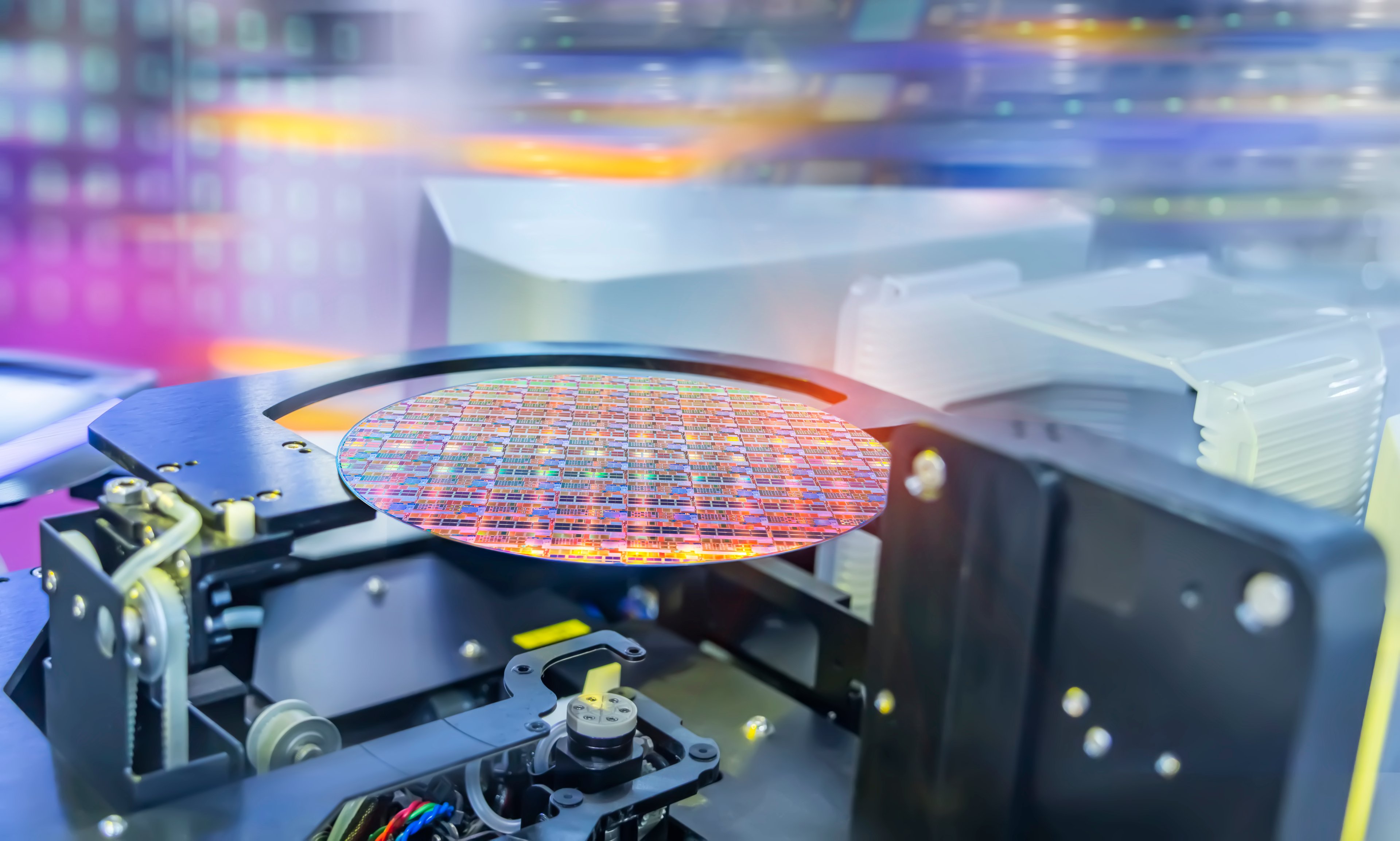 Image source: Getty Images.
ASML Holding: The Architects of AI Chips
While TSMC is responsible for fabricating the logic chips crucial to the AI infrastructure build-out, ASML manufactures the highly specialized machines that TSMC and other foundries utilize to produce these chips. ASML maintains an unparalleled monopoly in extreme ultraviolet (EUV) lithography, a technology that is absolutely essential for cutting-edge chipmaking.

As the demand for advanced logic chips continues its exponential growth, and as TSMC and other foundries ramp up their production capacities, their need for ASML's machines will commensurately increase. Memory manufacturers also rely on ASML to expand their capacity. Dynamic random-access memory (DRAM), including high-bandwidth memory (HBM), typically requires a combination of ASML’s older DUV (deep ultraviolet) technology alongside its EUV machines for the most critical layers, whereas NAND production primarily utilizes DUV machines.
With this persistent and growing demand for advanced chips and memory, ASML is exceptionally well-positioned to benefit from these market dynamics. Furthermore, the company has already pioneered high-NA EUV, a next-generation technology poised to become a significant future growth driver. Although TSMC initially expressed reservations about the cost of these new machines, other industry players are beginning to adopt the technology. High-NA EUV will eventually be indispensable for further shrinking chip nodes, ensuring ASML's dominant role and sustained growth for years to come.