




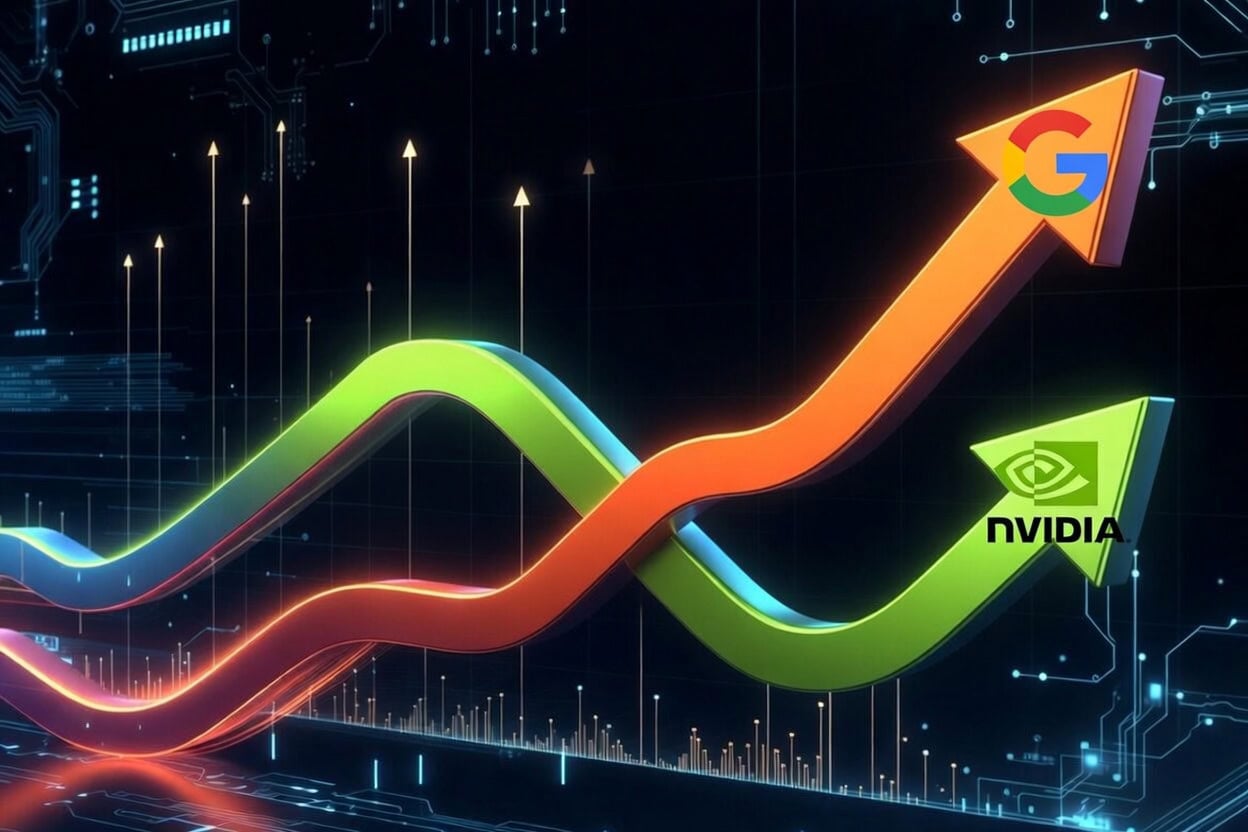
In a significant pivot, Apple is leveraging Nvidia GPUs and Google Cloud to power its cutting-edge frontier language model, FM Cloud Pro, for agentic AI tasks. This move marks a departure from its traditional vertically integrated approach and reliance on M-series-based private cloud infrastructure, highlighting the immense computational demands of next-generation AI. The decision underscores Nvidia’s dominance in AI compute and strengthens Google Cloud’s position as a leading hyperscaler, while raising questions about Apple’s long-standing privacy narrative.
In a significant strategic pivot, Apple, long celebrated for its robust vertical integration, is now turning to Nvidia and Google Cloud to power its most demanding artificial intelligence (AI) workloads. This notable development follows confirmation from Apple software chief Craig Federighi that the company's advanced frontier language model, FM Cloud Pro, will operate on Nvidia GPUs hosted within Google Cloud. This infrastructure will specifically handle complex reasoning and agentic workflows, marking a new chapter in Apple’s AI strategy.
Apple Breaks From Its Vertical Integration Playbook
This decision represents a profound departure from Apple's traditional approach of keeping core technologies in-house. Apple has meticulously engineered FM Cloud Pro to stand on par with Google’s own Gemini frontier models. The explicit use of Nvidia’s powerful GPUs, managed within Google’s cloud environment, is particularly striking. For years, Apple has invested heavily in developing an M-series-based private cloud infrastructure for AI compute, a strategy deeply aligned with its unwavering privacy-first commitment to consumers. Renting frontier compute capabilities from a rival hyperscaler fundamentally challenges this established paradigm.
Apple’s Private AI Infrastructure Hit a Scaling Limit
The primary catalyst for this strategic shift appears to be the immense scaling challenges encountered with Apple's proprietary infrastructure. While the M-series-powered private cloud has been operational for two years and continues to support various AI tasks, reports indicate it simply couldn't sustain the intensive demands of 'agentic experience' and multi-step reasoning required by the new frontier model. This revelation offers a stark lesson for investors: even a technology giant like Apple, with its world-class custom silicon, faces compute demands for advanced agentic AI that push beyond the limits of internal capabilities at scale.
Financially, Apple remains incredibly strong, reporting Q2 FY26 revenue of $111.184 billion and an impressive eighth consecutive EPS beat at $2.01. The company also authorized a new $100 billion share repurchase program. Following WWDC 2026, Morgan Stanley raised its Apple price target to $360 from $330, citing a clearer path to AI monetization.
Apple’s Decision Strengthens Nvidia’s Investment Thesis
Nvidia shares moved higher on the news, reflecting a powerful implicit endorsement: even a company renowned for its world-class internal silicon has turned to Nvidia for frontier-scale AI. Nvidia’s most recent quarter underscores this dominance, with Data Center revenue soaring 92% year over year to $75.25 billion. CEO Jensen Huang has characterized the current period as 'the largest infrastructure expansion in human history.' Nvidia also recently flagged an expanded collaboration with Google Cloud on agentic and physical AI, precisely the advanced capabilities Apple is now integrating. Nvidia guided next-quarter revenue to $91.0 billion, plus or minus 2%.
Alphabet, Google’s parent company, is another significant beneficiary. Google Cloud revenue grew a remarkable 63% to $20.03 billion in Q1, with its backlog nearly doubling quarter over quarter to over $460 billion. Adding Apple as a frontier-AI customer not only substantially thickens this backlog but also reinforces the strategic justification for Alphabet’s ambitious $180 to $190 billion capex plan for 2026.
The Privacy Tension and What to Watch
Apple’s AI strategy has long been intrinsically linked to its steadfast commitment to privacy and the 'iOS walled garden.' The reported decision to run a frontier AI model on third-party Nvidia GPUs via Google Cloud inevitably raises important questions about how Apple will reconcile outsourced compute with its core privacy positioning. While on-device processing and the M-series-powered private cloud infrastructure reportedly remain in place for other workloads, the distinction becomes crucial: the frontier and agentic AI layer appears to be the specific part of the stack that has moved beyond Apple’s proprietary infrastructure.
For investors, the clearest takeaway may be the reinforced significance of Nvidia. If even Apple ultimately needs Nvidia-powered infrastructure to deliver a competitive frontier AI product, it adds another compelling data point to the thesis that the industry’s most advanced AI workloads continue to rely heavily on Nvidia’s indispensable ecosystem. For Apple, the trade-off of leveraging Nvidia’s GPUs seems strategically sound: it allows them to rent the necessary frontier compute, rapidly ship a competitive product, and preserve their fundamental privacy narrative where feasible.