

Wix, initially seen as vulnerable to AI disruption, has orchestrated a significant turnaround through a partnership with Google Gemini. This integration allows users to generate fully functional websites directly within Gemini via the Wix Harmony builder, hosted on Wix’s infrastructure. This strategic move has transformed the AI threat into a growth opportunity, contributing to a strong rebound in WIX stock from its June lows, despite ongoing investments impacting GAAP profitability.
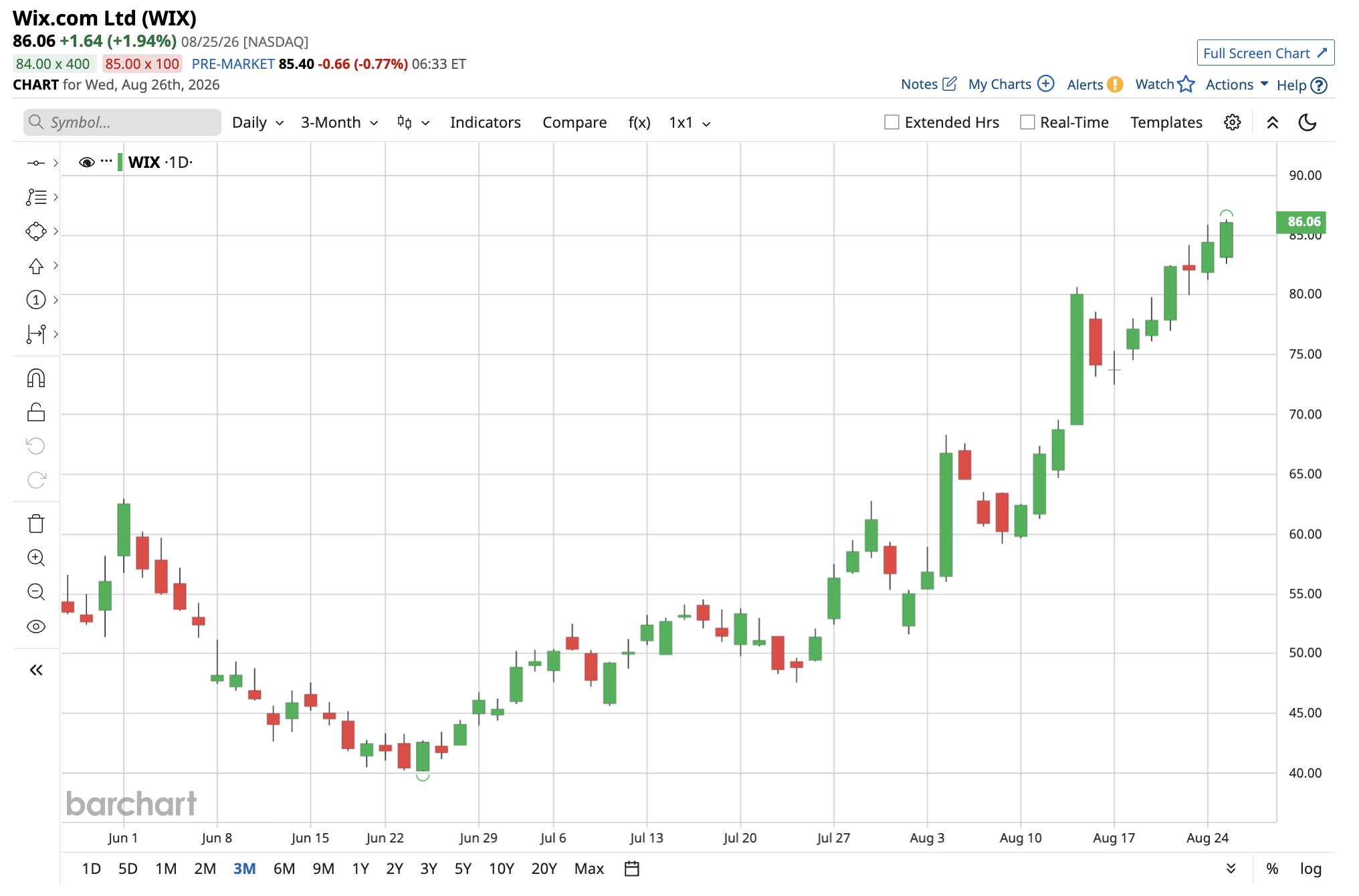
Once perceived as a potential casualty of the artificial intelligence revolution, web development platform Wix (WIX) has found a powerful new ally in Alphabet's Google (GOOGL). The market had been harsh on Wix through 2026, fearing that advanced AI chatbots capable of building websites would render traditional site builders obsolete. This apprehension sent WIX shares tumbling from over $100 at the year's start to a 52-week low of approximately $40 by June, coinciding with a roughly 20% staff reduction.
/AI%20(artificial%20intelligence)/Artificial%20Intelligence%20AI%20by%2013_Phunkod%20via%20Shutterstock.jpg "Wix Rebounds with Google Gemini: How AI Integration Is Powering its Comeback")
However, a game-changing announcement on August 24 revealed a strategic partnership: Wix has integrated its Harmony builder directly into Google Gemini as a connected application. This innovative collaboration allows users to simply type “@Wix” within Gemini, describe their desired website via voice or text, and instantly generate a fully functional site. Crucially, these sites are hosted on Wix’s infrastructure, complete with features like e-commerce, payment processing, scheduling, and SEO capabilities built-in from the outset. This service is now live in eligible markets for Gemini users, and the news provided an immediate boost to WIX stock.
Turning the AI Tide: Wix's Strategic Pivot
Rather than succumbing to the perceived AI threat, Wix has ingeniously transformed it into a significant opportunity. By embedding itself within Gemini, Wix has leveraged the chatbot as a conduit to a vast new audience. Gemini handles the user interaction and initial site conception, while Wix provides the robust building engine, hosting, and crucially, retains the paying customer. This positions Wix far more favorably than if it had attempted to compete directly with Google's AI offerings.
It's important to acknowledge that as a connected app, Wix operates behind the scenes, with Google controlling the initial user interface. While Wix gains unparalleled reach, it does cede some direct customer relationship. The ultimate success of this strategy hinges on the conversion rate of Gemini-generated sites into long-term, paying Wix subscribers. Since its June low, WIX stock has roughly doubled, showing strong recovery after its latest earnings report, which highlighted a 15% revenue increase and meaningful contributions from Wix’s own AI products.
A Closer Look at WIX Stock and Financials
Founded in 2006 and headquartered in Tel Aviv, Israel, Wix offers a comprehensive web development platform via a Software-as-a-Service (SaaS) model. Its suite of products ranges from website templates and builders to hosting, domain services, and an AI website builder, catering to individuals, small businesses, and enterprises aiming to establish an online presence.
Despite the recent uptick, WIX stock has experienced a challenging year, declining approximately 37% over the past twelve months, significantly underperforming the SPDR Software & Services ETF (XSW), which gained 10% during the same period. Year-to-date, Wix has fallen 16% against the ETF's 12% returns. Investor concerns about AI disruption, a first-quarter earnings miss, escalating AI-related expenses, and softer performance in its Partners segment have all contributed to this pressure.
From a valuation perspective, Wix appears undervalued on a sales basis. Its forward price-to-earnings (P/E) ratio is currently not meaningful due to GAAP losses stemming from heavy investments in AI. However, the company remains profitable on a non-GAAP basis. The price-to-sales (P/S) ratio of 2.5x is considerably below its five-year average of approximately 5x, suggesting lingering market fears about AI's disruptive potential.
Analyst expectations align with management's investment strategy, predicting a sharp 93% fall in fiscal 2026 earnings before a significant rebound in fiscal 2027. The balance sheet shows roughly $961 million in cash against $2 billion in debt, resulting in over $1 billion in net debt – a substantial amount for a company valued at approximately $5.1 billion. Nevertheless, if the anticipated earnings turnaround materializes, current investors might be acquiring shares at an attractive entry point.
Growth Acceleration Driven by AI Investments
Wix’s second-quarter fiscal 2026 earnings, reported on August 4, showed revenue climbing 15% year-over-year to $563.1 million, surpassing Wall Street estimates. Non-GAAP EPS reached $1.59. However, non-GAAP gross margin dipped to 67% from 70% a year prior, primarily due to ongoing investments in Base44 and increased AI compute costs. High spending on sales and marketing also impacted profitability, with non-GAAP operating income at 12% of revenue.
For the full year 2026, Wix anticipates low-to-mid-teens percentage revenue growth and low-teens bookings growth. Management also projects a high-teens percentage free cash flow margin, excluding acquisition and restructuring expenses. Q3 forecasts suggest low double-digit percentage revenue growth year-over-year. A key component of this outlook is Base44, with gross margin expected to reach about 60% in the second half of the year.
Analyst Sentiment on WIX Stock
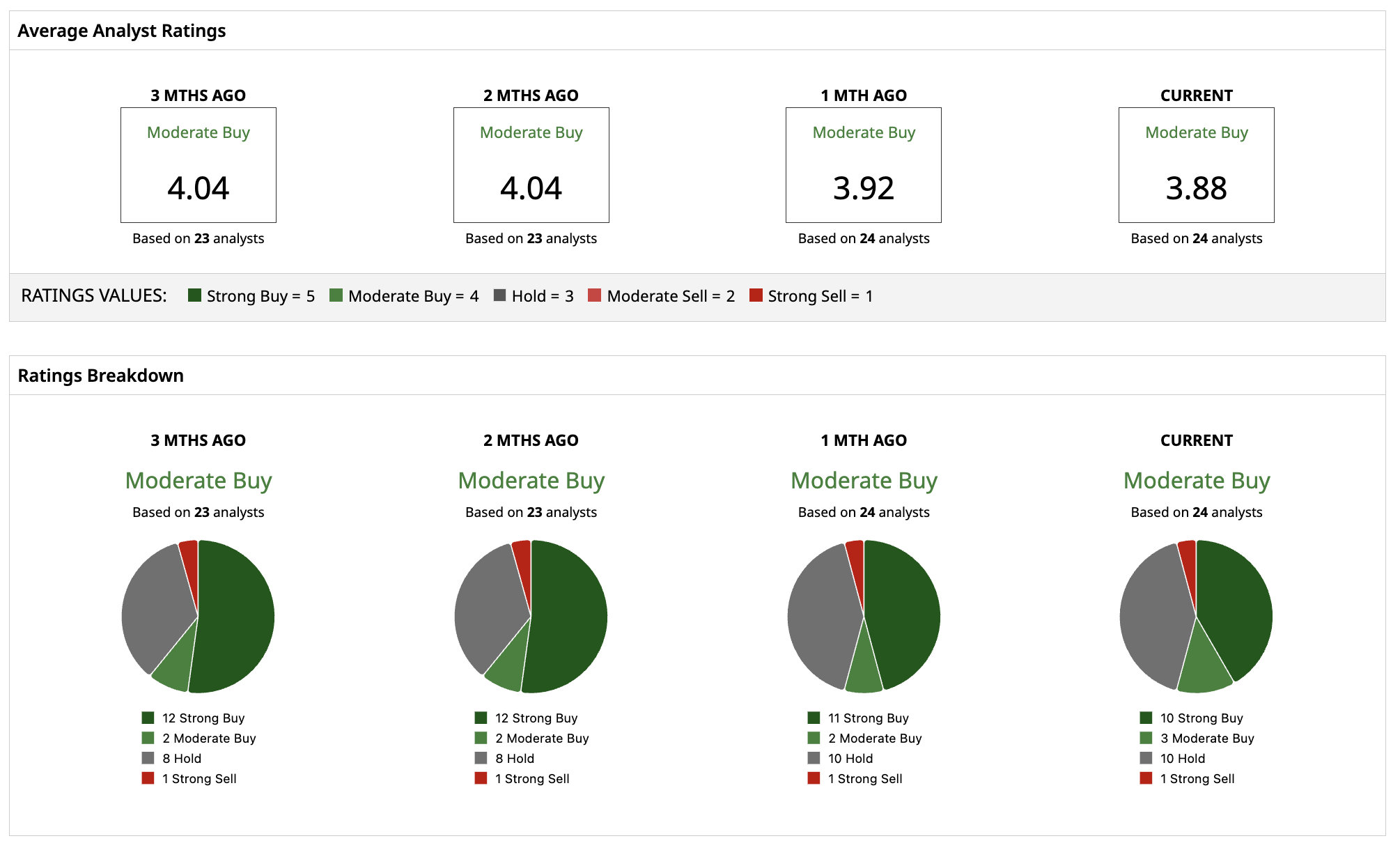
Wall Street analysts hold a "Moderate Buy" consensus rating for Wix, based on coverage from 24 firms. This includes 10 "Strong Buy" ratings, three "Moderate Buy" ratings, 10 "Hold" ratings, and one "Strong Sell" rating. The average price target is $82.32, slightly below current levels, while the highest target of $140 indicates a potential 60% upside.
Recent updates include Wedbush raising its price target from $55 to $80 while maintaining a "Neutral" rating, citing improving profit margins and potential cash profitability. Citi retained a "Hold" rating with a $72 price target. In contrast, B.Riley Securities affirmed a "Buy" rating and a bullish $135 price target.